


TL;DR
SBI saw profit rise to about 5.5% and the net income grew only 4.1% YoY. Domestic net interest margins fell to 2.93% and operating profit dropped sharply.
Introduction
SBI share price came under heavy pressure after the lender posted its Q4 FY 26 results, with the stock falling about 7% even though net profit increased year-on-year. The market focused more on weak operating performance, margin contraction, and lower than expected NII than on the profit rise.
SBI Share Price
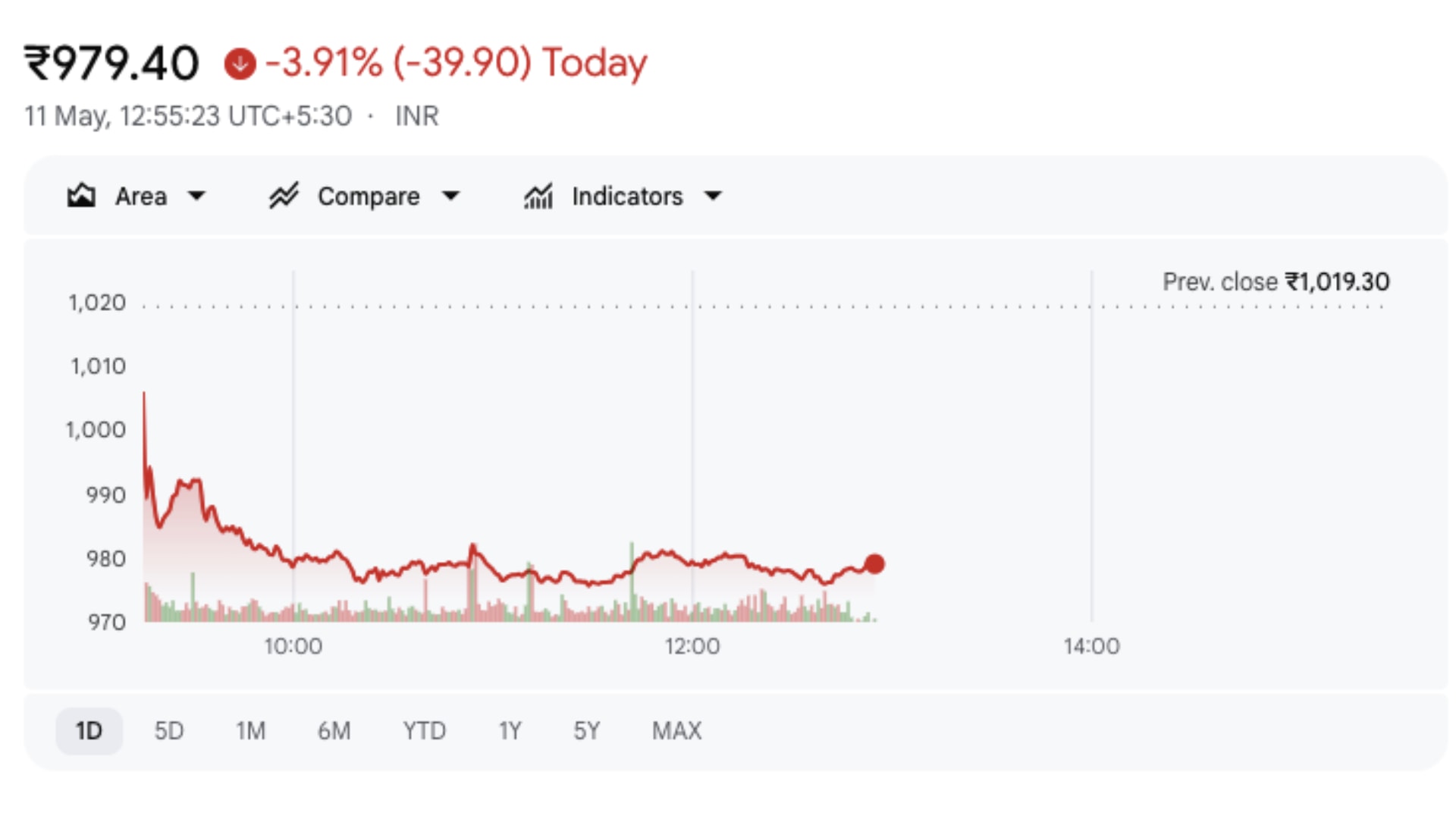
Source: Google Finance
SBI share price is stocking around ₹977.3 on NSE, down 4.12% on the day, after a sharp post-results selloff. The decline indicates investors' concern over margin squeeze. The main trigger is weaker quality of earnings. (ET)
Why SBI Share Price Fell?
The key reason behind the drop in SBI share price was margin compression. SBI’s domestic net interest margin fell to 2.93%, compared with 3.14% in Q4FY25 and 3.11% in Q3FY26, which signalled pressure on core lending profitability. (Upstox)
Investors also reacted to weaker operating performance, as SBI’s operating profit reported more than expected on both a quarterly and yearly basis.
Even though net profit rose, the market was looking for stronger loan-income momentum and better margin stability.
Q4 Results At A Glance
Metric | Q4 FY 26 Result |
Net profit | ₹19,683.75 crore, up 5.5% YoY |
Net interest income | |
Domestic NIM | 2.93% |
Operating profit | Down 15.7% QoQ and 11.45% YoY |
Fresh slippages | About ₹5,521 crore, up ~24% QoQ |
Source: whalesbook
What Investors Are Worried About?
The earnings report showed that SBI’s profitability is still under stress from margin compression.
A bank can post profit growth and still disappoint the market if the core business indicators weaken, and that is exactly that happened here. The rise in fresh slippages brought more caution ahead on asset quality, even though the gross NPA ratio improved to 1.49%. In simple terms, the market preferred the quality of earnings over the headline profit number.
SBI Share Price Outlook
For the near term, SBI Share price may remain sensitive to any further signs of margin pressure, deposit- cost stress, or loan yield weakness. On the positive side, SBI still reported profit growth and an improving asset-quality profile, which can support long term investor confidence.
For market participants, the next trigger will likely be whether SBI can protect margins while maintaining loan growth. If margins stabilize, the stock may recover part of the earnings -day decline.
Conclusion
SBI share price fell because the market judged the results on core banking metrics rather than just profit growth. The combination of lower NIM, weaker operating profit, and softer than expected NII outweighed the rise in the net profit.
That makes this a classic case of good headline profit but weaker underlying quality from the market’s point of view.
FAQs
Why did SBI share price fall even after profit rose?
Looks the investors focused on weaker NII growth, falling margins, and lower operating profit, which matter more than profit increase.
What is the Q4 net profit registered under SBI?
SBI reported a net profit of ₹19,683.75 in quarter 4 of FY 26, which is 5.5% up YoY.
Can you tell the main reason behind the margin squeeze?
The domestic NIM fell to 2.93%, reflecting a pressure on lending profitability.
Can we consider that SBI is fundamentally strong?
Considering the profit growth and better asset quality, we can say that SBI is strong. But the Q4 results highlighted pressure on core earnings and margins.
Should investors watch SBI share price closely?
Yes, it is advisable to watch the SBI share price future updates


.webp)