1.jpg)

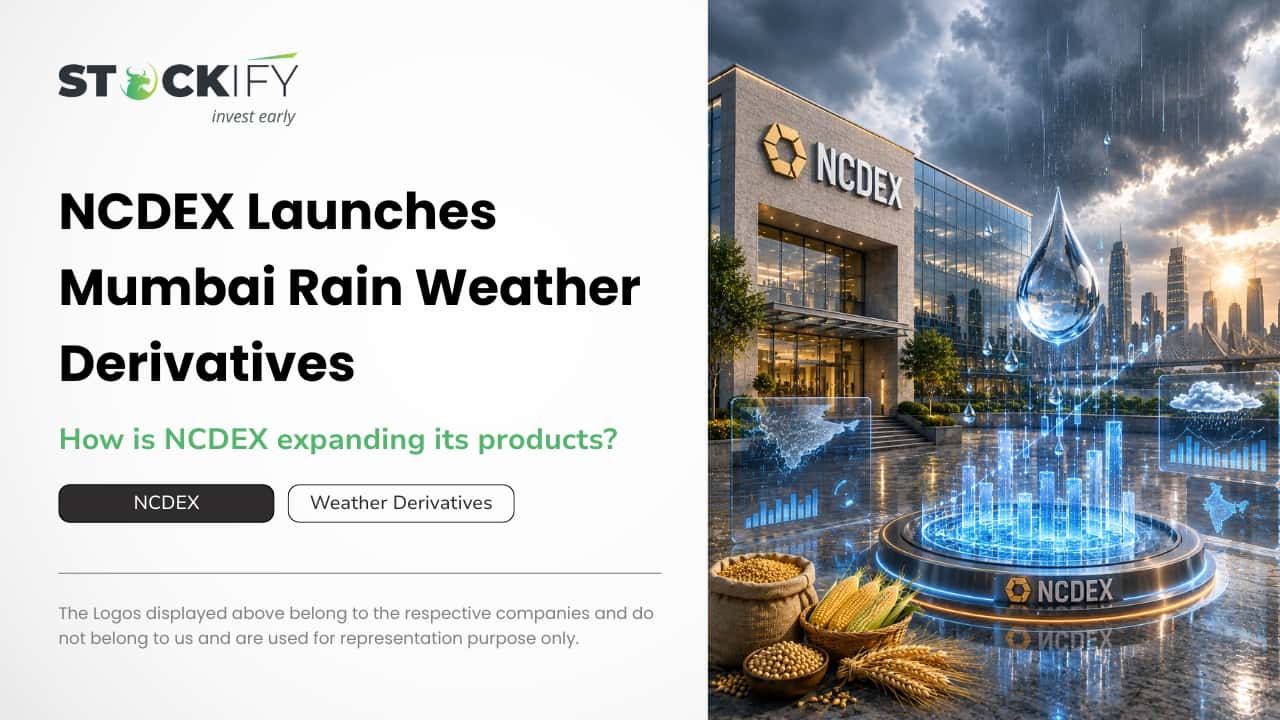
For decades, the Indian monsoon has quietly influenced economic activity. A delayed shower can affect crop output, heavy rainfall can interrupt logistics, and unpredictable weather can reshape energy demand, retail consumption, and commodity prices. Businesses have long absorbed the financial impact of weather yet lacked a regulated mechanism to manage that exposure. That may now be changing. With the launch of RAINMUMBAI, India’s first SEBI-approved exchange-traded weather derivatives contract, NCDEX is enabling participants to hedge or take positions on Mumbai’s rainfall itself, turning weather into a measurable financial variable. The arrival of NCDEX weather derivatives also marks India’s entry into climate-linked financial instruments.
What Has NCDEX Introduced?
RAINMUMBAI is a cash-settled futures contract linked directly to Mumbai rainfall. Unlike conventional commodity futures, settlement depends on rainfall data rather than physical delivery or asset prices. The product is built around a Cumulative Deviation Rainfall (CDR) index, which measures how actual rainfall differs from Mumbai’s historical Long Period Average (LPA) using approximately 30 years of IMD rainfall records (1991–2020) from Santacruz and Colaba stations.
If rainfall moves beyond expected levels, the contract value adjusts accordingly. Settlement is automatic and determined entirely by objective weather measurements, removing lengthy claims processes and loss assessments typically associated with insurance products.
The NCDEX-IMD Collaboration Behind the Initiative
The launch follows an MoU signed between NCDEX and the India Meteorological Department (IMD) in June 2025, aimed at developing India’s first structured ecosystem for weather-linked derivatives using historical and real-time meteorological data.
The collaboration extends beyond rainfall products and is intended to support instruments linked to heatwaves, irregular weather patterns, and climate-related disruptions. It also includes research efforts, training programmes, and knowledge-building initiatives for farmers, traders, analysts, and other stakeholders. The broader ambition behind NCDEX weather derivatives is to transform weather information into a practical financial risk management framework.
Why Mumbai Became the First Market
Mumbai experiences some of the most intense urban rainfall globally. Heavy rain frequently disrupts transportation, construction activity, retail demand, logistics networks, and financial operations. The economic cost of these disruptions is measurable and recurring, but until now, there was no listed financial instrument specifically designed to manage this exposure.
RAINMUMBAI enters precisely this gap.
How the ‘RAINMUMBAI’ Payout Structure Works
The contract trades during the monsoon period between June and September and carries a tick size of 1 mm rainfall with a lot multiplier of ₹50 per mm.
For instance, if expected rainfall stands at 1000 mm and actual rainfall reaches 1150 mm, the deviation of 150 mm translates into:
150 × ₹50 = ₹7,500 exposure per lot
Likewise, lower-than-expected rainfall creates payouts for participants positioned against weaker monsoon conditions. The larger the deviation from the Long Period Average, the greater the contract impact.
Who Could Benefit From Weather Derivatives?
The system operates across multiple agricultural units to provide service for all users who need it. The financial instruments provide operational benefits to FMCG companies which experience distribution disruptions and to logistics operators and construction companies that encounter project delays and to power utilities which must handle their shifting power requirements and to banks that serve agricultural clients and to commodity traders and institutional market participants.
The insurance products work to manage climate-related financial risks through market-based solutions instead of operating as an insurance policy substitute.
A New Direction for Climate Risk Management in India
RAINMUMBAI represents more than another futures contract launch. It signals a future where weather in India may gradually shift from being only a forecast to becoming a tradable financial indicator.
If adoption gathers pace, NCDEX weather derivatives could evolve into an entirely new category for climate-risk management, with future products linked to rainfall in agricultural regions, temperature variations, and heatwaves.
The monsoon has always shaped Indian markets indirectly. Products like RAINMUMBAI suggest markets may soon begin responding to the monsoon more directly.
Also Read: NCDEX Diversification Strategy: Equity Derivatives In 12 Months, Cash Segment In 2026