

TL;DR
NSE’s unlisted shares have risen ~15% over the past year and are currently trading around ₹2,000–₹2,150. It reflects optimism after SEBI cleared regulatory hurdles. This will be India’s most consequential IPO ever with a potential ₹20,000 crore OFS.
Introduction
The National Stock Exchange of India (NSE) first filed for an IPO back in 2016. But regulatory controversies along with co-location scam, and protracted SEBI proceedings caused nearly a decade of delays. But 2025-26 has brought a decisive shift in the narrative.
SEBI chairman Tuhin Kanta Pandey publicly stated there is “no obstacle” remaining in the way of the NSE IPO. SEBI has given in principle approval to NSE’s application in the long running unfair market access case, clearing the single largest regulatory hurdle.
NSE Unlisted Share Price: The Numbers in Focus
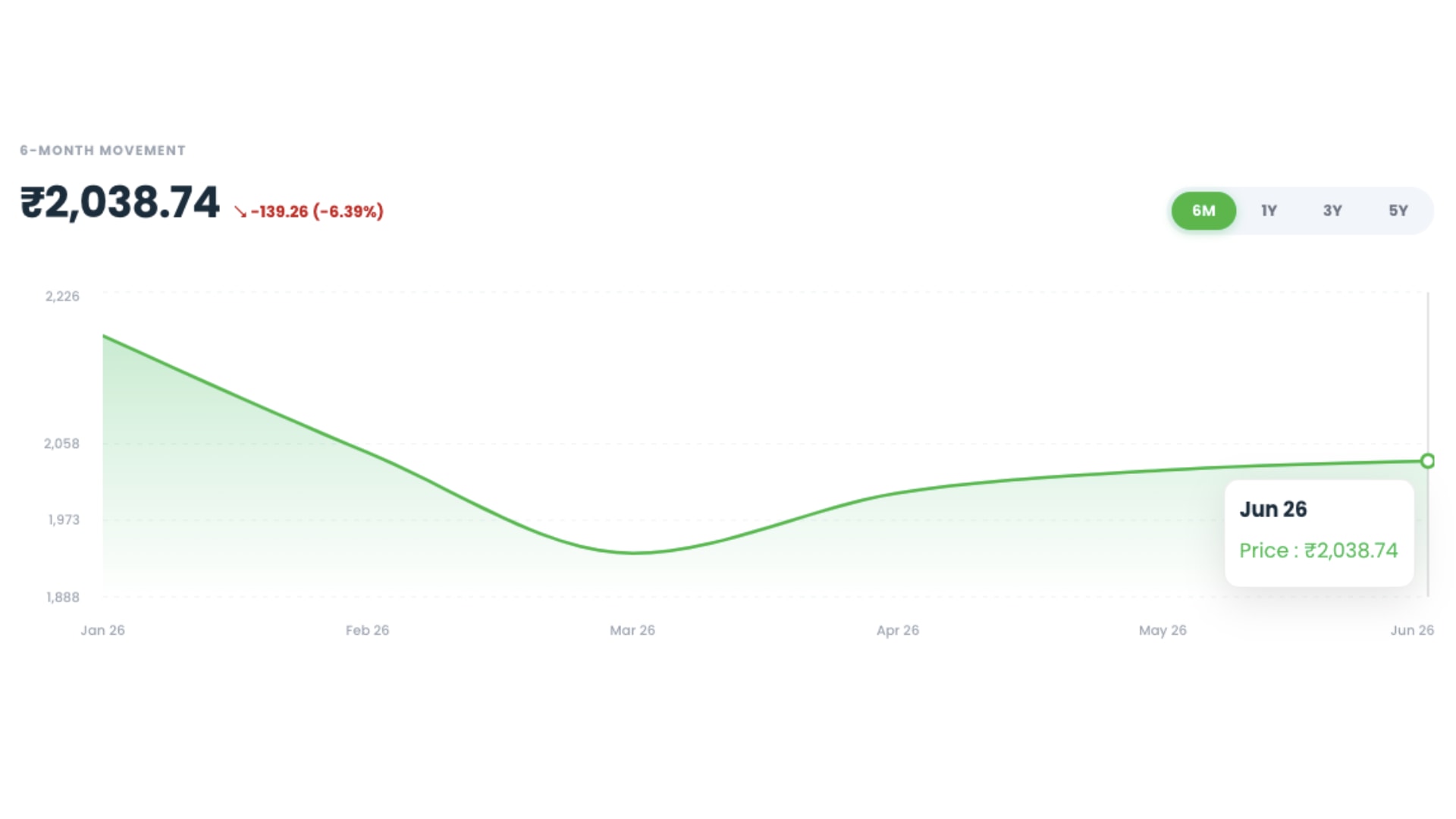
NSE’s unlisted shares have climbed approximately 15% over the past year. This is a moderate but steady appreciation, compared to the explosive 27% single-day surge seen in May 2025.
It suggests that the market is now pricing in IPO probability more rationally rather than speculating on it. Over the past 5-6 months, the NSE share price has risen nearly 5%. The long-term timeframe is even more striking, with the unlisted share price rising about 172% over an extended period.
NSE Unlisted Share Price
Buy the NSE unlisted shares from here.
IPO Structure: The Deal Parameters
Every serious investor in the unlisted space needs to understand what they’re actually buying into. Here is the confirmed deal architecture as of June 2026.
Parameter | Detail |
IPO Type | Pure Offer for Sale (OFS)-zero fresh capital |
Stake Dilution | 4–4.5% of equity |
Expected Issue Size | ~₹23,000 crore (~$2.5 billion) |
Management's Target Valuation | ₹5+ lakh crore |
Implied Share Price at Listing | TBD post SEBI observation |
Listing Target | Before December 2026 (Q3 FY27) |
DRHP Filing Window | June 5–15, 2026 |
Source: YouTube
The pure OFS structure means no dilution of float and no cash to the company, all proceeds go to existing shareholders exiting their stake.
FY 26 Financials: What the Numbers Actually Say
NSE released its Q4 and full year FY26 results in May 2026. The headline PAT decline is real.
Metric | FY 25 | FY26 | Change |
Revenue from Operations | ₹17,141 cr | ₹16,601 cr | Down 3.1% |
Operating EBITDA | ₹12,647 cr | ₹11,098 cr | Down 12% |
PAT | ₹12,188 cr | ₹10,302 cr | Down 15% |
Cash & Cash Equivalents | — | ₹32,261 cr | Strong |
Total Assets | ₹69,467 cr | ₹87,937 cr | Rise 27% |
Dividend Declared | ₹35/share | ₹35/share | Maintained |
Source: NSE
The PAT decline is entirely attributable to a ₹1,391 crore SEBI settlement provision booked during FY 26. The core operations remained strong, with the trading segment alone generating ₹ 9,151+ crore in profit.
Valuation: Is ₹ 2,015 Still A Smart Entry for NSE Unlisted Share Price?
This is the real question for the investors:
The Bull Case (~65% probability priced in):
NSE is the world’s largest derivative exchange by volume, a monopoly graded asset.
At ₹5 lakh crore implied market cap, it trades at ~48x FY 26 PAT, premium byt justifiable for a regulated infrastructure monopoly.
Transactions revenues surged 39% in Q4 FY26 which further points to sharp earnings recovery in FY 27.
Also Read: NSE Investor Accounts Crosses 26 core.
The Bear Case
In January 2026, Hitesh Dharawat publicly called NSE “expensive above ₹2000” and cited fair value at ₹1,500-₹1,800. (Business Today)
At ₹2,015 investors in the unlisted market are paying a significant listing premium risk, if IPO pricing comes below grey market price.
Retail Frenzy: Changing Investor Base in NSE
The investor base in NSE’s unlisted market has undergone structural change in 2026. The exchange now counts approximately 1.46-1.77 lakh shareholders in the grey market. In just three months during mid 2025, over 1 lakh retail investors had entered the market.
The trades now happen in small lots of 10 shares, which is an unthinkable threshold. Wider participation stabilises the market and signals genuine long-term conviction. But it also indicates that the unlisted price now carries significant retail sentiment risk.
What Happens After DRHP is Filed?
The next six months will be a critical window for NSE’s IPO journey. Here is what the sequential timeline investors need to track:
DRHP to be filed with SEBI, in the time span June 5-15, 2026.
The SEBI review and observation letter will take 30-75 days.
Post that the estimated time for roadshow and price band announcement is estimated in September-October 2026.
The IPO subscription window is expected to be opened by October-November 2026.
If all goes well, listing on NSE/BSE will most likely happen before December 2026.
Conclusion
The NSE IPO is no longer a “someday” story, with the DRHP at the doorstep of SEBI. The fundamentals are solid ₹10,302 crore PAT in FY 26 despite one-time hits. The IPO structure, a clean OFS at ~4.5% dilution, limits float overhang.
The question is not whether NSE will list or not. It is whether the current listed price of ₹2,015 already captures the upside. The answer will come in a few weeks, once the price band is declared.
FAQs
What is the NSE’s current unlisted share price in June 2026?
The unlisted share price of NSE in June 2026, is trading at ₹2,015 per share.
Why is NSE’s unlisted share price up 15% in one year?
The primary catalyst is SEBI granting its NoC this year on January 30, 2026. This cleared the decade-long regulatory overhang from the co-location base.
When will the NSE IPO DRHP be filed?
The NSE is targeting the filing of DRHP in the June 5-15, 2026 window.
What is the expected size and valuation of NSE’s IPO?
The IPO is expected to be a pure OFS raising approximately ₹23,000 crore. The target valuation is over ₹5 lakh crore.