



Table of Contents
Buy/Sell Your Unlisted Shares
Submit the details below to share a quote.
India’s National Stock Exchange has received regulatory clearance to move ahead with its IPO, ending nearly a decade of regulatory uncertainty. The Securities and Exchange Board of India granted a no-objection certificate on January 30, 2026, allowing the exchange to proceed with filing its Draft Red Herring Prospectus.
NSE IPO Is On Offer For Sale, No Fresh Issue
The NSE IPO is structured as a pure Offer for Sale of approximately Rs 22,900 to Rs 23,000 crore, with no fresh equity issuance. Existing shareholders will dilute a small portion of their holdings, led by Life Insurance Corporation of India and Temasek Holdings.
NSE Current Shareholding
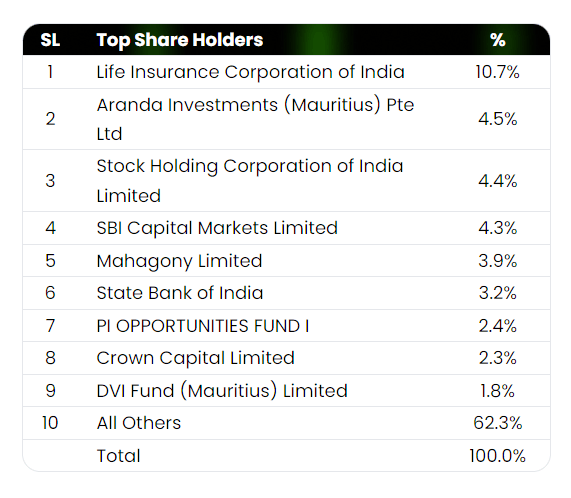
LIC holds a 10.72% stake in NSE, while Temasek (Aranda Investments) owns around 4.5%. SBI Capital Markets and the State Bank of India together hold a stake of close to 7.7%.
Based on recent unlisted market transactions at around Rs 2,150 per share, NSE is valued at roughly Rs 5.3 lakh crore, placing it among the world’s most valuable exchange operators. The NSE IPO would rank among the largest listings ever undertaken in India’s capital markets.
Regulatory Clearance Removes Long-Standing Constraint
NSE first filed draft papers for the NSE IPO in 2016, but the process was halted following SEBI’s investigation into governance failures, including the co-location matter involving preferential access to trading infrastructure for select brokers. In 2019, SEBI imposed monetary penalties and barred former senior executives from associating with market infrastructure institutions. Over subsequent years, NSE resolved multiple enforcement actions and implemented changes to governance and technology frameworks.
The January 2026 clearance indicates that the regulator is satisfied that legacy issues have been addressed, enabling NSE to proceed under public market oversight. As a market infrastructure institution, the exchange is subject to a higher regulatory threshold than typical issuers and requires explicit SEBI approval before advancing the NSE IPO process.
Also Read: NSE Offers 1000 Crore To Settle SEBI Case, Bring Back IPO
Timeline, financials, and market context
NSE Managing Director and CEO Ashish Chauhan said preparation of documentation for the NSE IPO would take three to four months, followed by SEBI’s review. The overall IPO process is likely to extend over seven to eight months, placing the listing toward the end of 2026. A board-level committee is expected to be constituted in early February to oversee banker appointments, documentation, and regulatory coordination.
NSE Valuation And Financial Comparision With BSE
For FY25, NSE reported consolidated total income of Rs 19,177 crore and net profit of Rs 12,188 crore, supported by strong derivatives activity and high operating margins. Transaction charges accounted for nearly three-fourths of operating revenue.
The NSE IPO will place the exchange in direct valuation comparison with BSE Limited, which is already listed. Market participants are likely to reassess exchange economics, governance standards, and regulatory risk before trading in NSE Unlisted Shares.
For investors, the NSE IPO enables direct participation in India’s core market infrastructure. Valuation discipline, regulatory oversight, and long-term competitive dynamics are expected to shape how the stock is assessed once listed.
You may also like to read

What Are The Different Classes Of Shares Issued In India?

Different Classes of Assets In The Financial Market

Follow These Simple Share Market Tips While Investing

Importance of Investing in Unlisted Shares

Step-by-step Process Of Transferring Unlisted Shares (Off-market)

Pre IPO Success Stories To Start Your Unlisted Share Trading

What Is The Expected Return Of Unlisted Shares?

A Detailed Guide On How To Buy Unlisted Shares In India

Know Your Tax Implications Before Investing In Unlisted Shares

Common Mistakes To Avoid While Investing In Unlisted Shares
How To Pick Best Performing Unlisted Stocks in India?

Risks And Rewards Associated With Unlisted Share Investment

Difference Between Start-Up Investing And Unlisted Shares?

IPO Process in India: Key Steps Explained Clearly

Revealed: The Real Picture of Unlisted Shares in Grey Market

Key Financial Ratios And How To Use Them To Analyse Your Investment

101 Guide For Beginners: What Is Pre IPO Share Market?

10 Golden Rules Of Investing In Stock Market

Listed Shares Vs. Unlisted Shares - Detailed Comparison

The Dark Side of Paytm's IPO Explained In Details

What Leads to Delisting of Shares and What Goes Behind The Scenes?

When Should You Review Your Portfolio Professionally?

In-Depth Analysis of Pre-IPO Shares for Portfolio Growth

PharmEasy Unlisted Price Falls 70%. Here's why

Delaying Pre-IPO Investments? Here’s What You Risk

An NRI’s Guide To Invest In Unlisted Shares In India

Guide To Filter The Most Profitable Unlisted Companies In India

A Comprehensive Guide On Follow-on Stocks

Care Health Insurance

Smart Strategy to Buy & Sell Unlisted Shares Professionally

Top Highly Profitable Unlisted Companies In India To Look For As An Investor

Upcoming IPOs In 2022-2023

Expert’s Driven Roadmap To Research A Startup IPO

Capgemini Unlisted Shares: Is The Risk Worth?

HDFC Sec vs HDB Financial: Which Is the Better Pick?

Detailed Guide To Calculate Capital Gains on Unlisted Shares

Dematerialisation of Unlisted Shares and Its Impact On Shareholders

How are B9 Beverages Pvt Ltd (Bira91) Unlisted Shares Gaining Pace Again?

Reliance Retail: The Success Story of India's Largest Retail Brand

The Future Of Unlisted Shares In the Fintech Market
Employee Stock Ownership Plan: What, How, and Why?

Studds Unlisted Shares: 6 Reasons to Buy Now

LAVA’s Unlisted Shares Soar Under Atmanirbhar Push
NSE vs BSE: Detailed 101 Market Share Comparison

The Role Of Corporate Governance And Management In Unlisted Companies

What's Temperature Ahead Of Tata Technologies' ₹4,000 Cr. IPO?

The Future Outlook For Unlisted Shares As An Investment Option

How to Buy and Sell Unlisted Shares in India?

The Benefits And Drawbacks Of Investing In Unlisted Shares