


Table of Contents
Buy/Sell Your Unlisted Shares
Submit the details below to share a quote.
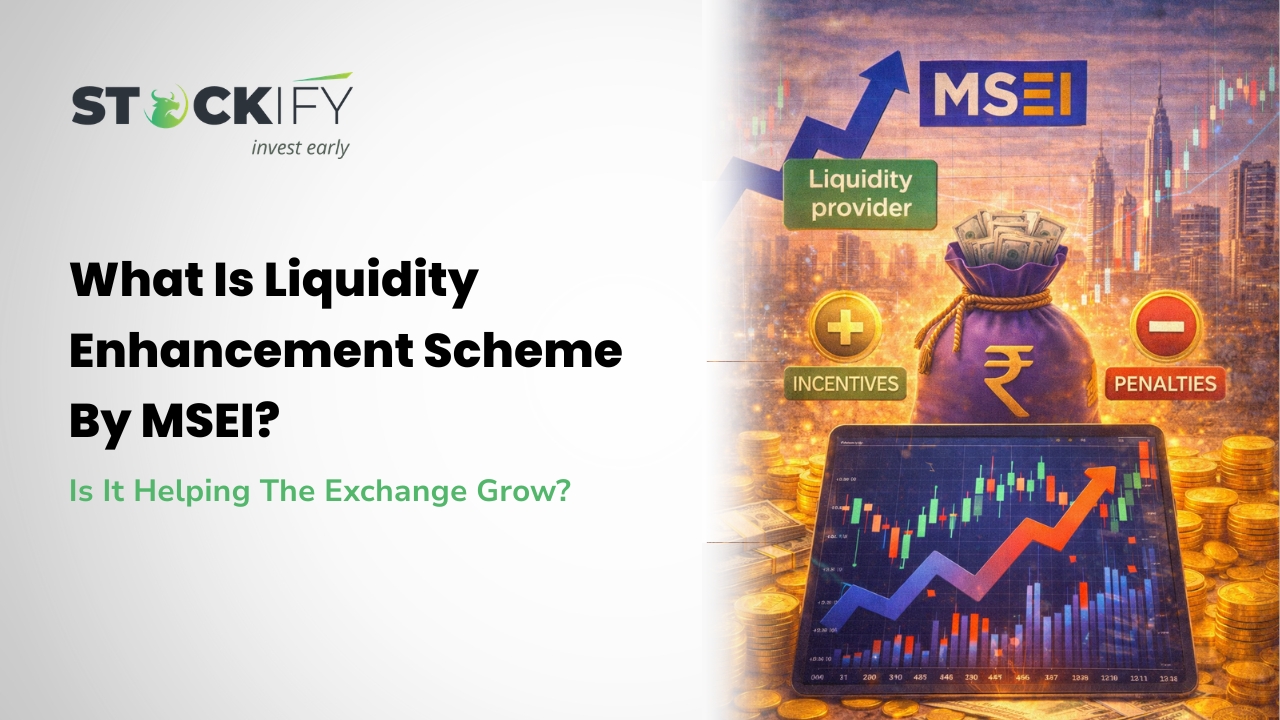
The Liquidity Enhancement Scheme (LES) is a system used by exchanges like the MSEI to increase trading activity in stocks that normally have very low trading activity. In this blog, we explore the reasons for introducing this scheme by MSEI, how the scheme works, and the impact of LES on MSEI trading activity.
Why Does MSEI Introduce LES?
Newly launched or relaunched schemes often face the problem of liquidity. If very few people buy and sell a stock, trading becomes slow, and prices become unreliable. To solve this, MSEI introduced the Liquidity Enhancement Scheme (LES) to increase trading activity in stocks that are otherwise likely to see very little participation.
The exchange encourages certain participants, known as market makers, to continuously place buy and sell orders in these stocks and in exchange, they receive financial incentives. This process can help investors to continue to find a buyer or seller when they want to trade.
This SEBI-approved scheme primarily focuses on stocks with low liquidity. Around 130 securities, along with newly listed IPO stocks, have been selected for the scheme. The initiative is currently scheduled to run until June 30, 2026. During this period, market makers can earn incentives of up to Rs. 40 lakh/month. Additionally, the exchange likely waives trading fees for these participants. This can make it more attractive for them to provide liquidity.
How Does The LES Work?
Market makers participating in LES are required to keep two-way quotes, both buy and sell orders. Below is a hypothetical situation:
Case 1: A Stock Has No Liquidity:
Suppose a stock is listed on MSEI. Now, without LES, the order book may look like this:
Buy order: Rs.100 →100 shares
Sell order: Rs.110 → 100 shares
Here, the gap between the buy and sell prices is very large. Therefore, investors could hesitate to trade; very few transactions are likely to happen, and the stock becomes illiquid.
Case 2: Market Maker Enters Through LES:
Under LES, a market maker is assigned to provide liquidity. The market maker places continuous buy and sell quotes. Example:
Buy → Rs.100 for 5,000 shares
Sell → Rs.100.20 for 5,000 shares
Now the gap between prices is very small. Therefore, traders can easily buy or sell, and the stock will likely become more active.
Case 3: Market Maker Earns Incentives:
The market maker keeps buying and selling quotes actively, trades regularly, and maintains a small price spread. So, the exchange pays them incentives. These incentives may include monthly payments, trading fee waivers, and performance bonuses.
Who Are The Designated Market Makers In MSEI LES?
Under the LES schemes, market makers are selected through a transparent bidding process. The exchange has not publicly disclosed the exact names of the firms that are participating in the scheme as of March 2026. Now let's have a look at the details of this.
1. Selection Process Of Market Makers:
MSEI appoints market makers through a competitive auction. These firms commit to providing continuous buy and sell quotes in selected stocks. In return, they can earn incentives of up to Rs.40 lakh per month if they meet the liquidity obligations.
2. Participants As Market Movers:
The participants are likely mid-sized brokerage firms or boutique trading firms. For example, companies like Groww or Zerodha typically do not act as market makers in such schemes. The structure is likely similar to the liquidity programs used earlier by BSE, where a small group of professional liquidity providers handled the quoting responsibilities.
3. Stock Coverage Under LES:
Around 130 stocks are part of the LES, including well-known names such as Wipro, HDFC Asset Management Company, Ather Energy, Swiggy, and Axis Bank. Market makers are required to maintain buy and sell quotes for 85-90% of the trading session in these securities.
Source: MSEI Liquidity Enhancement Scheme
MSEI Initiating Market Makers Officially From 1st April 2026
MSEI released a press note on 24th March announcing the successful completion of appointing market makers to
Strengthen market depth,
Support efficient price discovery, and
Enhance the overall trading experience.
This can increase MSEI trading activity and value from the beginning of April 2026.
LES Incentives Details Up To 40 Lakh Per Month
MSEI LES pays an incentive to market makers of up to Rs. 40 lakh per month for continuously providing buy and sell quotes in selected stocks. Here’s how the incentive structure works in simple terms.
Base quoting payment:
Roughly Rs. 1.1 lakh per stock per month, and participants typically handle 20-40 stocks under the LES scheme.
Trading activity rewards:
For every Rs.1 crore worth of trades, the reward can range from Rs.110 to Rs.1,810, depending on whether they are on the passive or active side of the trade.
Open interest incentive:
If the market maker helps maintain strong positions and liquidity in the market, they can earn an additional Rs.500 per crore of open interest per day, with a daily cap of around Rs.1 lakh.
Performance Bonus:
There can also be a large bonus for consistent quoting. Suppose a participant maintains buy and sell quotes for around 90% of the trading session across about 40 stocks; they might qualify for a bonus that may go up to Rs.50 lakh.
Trading Fees Likely To Be Zero:
On top of these incentives, the exchange might also waive trading fees for market makers. Simply, the more consistently a market maker provides liquidity, the more incentives they can earn. So, market movers provided liquidity, likely by quoting prices, executing trades, and maintaining activity in the order book. If they fully meet all the conditions, their monthly payout might reach around Rs. 40 lakh or even more.
Impact Of LES On Trading Volumes Since January 2026
From its relaunch on 27th Jan 2026, MSEI has been able to execute 12.19 lakh trades with a traded value of 24.08 crore in 6 weeks of operations. Just Week 4 from 17 Feb to 23 Feb had the highest 1.3 lakh trades valued at Rs 9.44 crores. The possible reason could have been the Liquidity Enhancement Scheme by MSEI.
Read Here To Know More: MSEI Officially Resumes Trading: Is It The Right Direction?
You may also like to read

What Are The Different Classes Of Shares Issued In India?

Different Classes of Assets In The Financial Market

Follow These Simple Share Market Tips While Investing
Importance of Investing in Unlisted Shares

Pre IPO Success Stories To Start Your Unlisted Share Trading

Step-by-step Process Of Transferring Unlisted Shares (Off-market)

What Is The Expected Return Of Unlisted Shares?

Common Mistakes To Avoid While Investing In Unlisted Shares

Know Your Tax Implications Before Investing In Unlisted Shares
How To Pick Best Performing Unlisted Stocks in India?

A Detailed Guide On How To Buy Unlisted Shares In India

Risks And Rewards Associated With Unlisted Share Investment

Difference Between Start-Up Investing And Unlisted Shares?

IPO Process in India: Key Steps Explained Clearly

Revealed: The Real Picture of Unlisted Shares in Grey Market

Key Financial Ratios And How To Use Them To Analyse Your Investment
10 Golden Rules Of Investing In Stock Market

101 Guide For Beginners: What Is Pre IPO Share Market?

Listed Shares Vs. Unlisted Shares - Detailed Comparison
The Dark Side of Paytm's IPO Explained In Details

What Leads to Delisting of Shares and What Goes Behind The Scenes?

When Should You Review Your Portfolio Professionally?

In-Depth Analysis of Pre-IPO Shares for Portfolio Growth

PharmEasy Unlisted Price Falls 70%. Here's why
Delaying Pre-IPO Investments? Here’s What You Risk

An NRI’s Guide To Invest In Unlisted Shares In India

Guide To Filter The Most Profitable Unlisted Companies In India

A Comprehensive Guide On Follow-on Stocks

Smart Strategy to Buy & Sell Unlisted Shares Professionally

Care Health Insurance

Top Highly Profitable Unlisted Companies In India To Look For As An Investor

Upcoming IPOs In 2022-2023

Capgemini Unlisted Shares: Is The Risk Worth?

Expert’s Driven Roadmap To Research A Startup IPO

HDFC Sec vs HDB Financial: Which Is the Better Pick?

Detailed Guide To Calculate Capital Gains on Unlisted Shares

Dematerialisation of Unlisted Shares and Its Impact On Shareholders

How are B9 Beverages Pvt Ltd (Bira91) Unlisted Shares Gaining Pace Again?

Reliance Retail: The Success Story of India's Largest Retail Brand

The Future Of Unlisted Shares In the Fintech Market
Employee Stock Ownership Plan: What, How, and Why?

Studds Unlisted Shares: 6 Reasons to Buy Now

LAVA’s Unlisted Shares Soar Under Atmanirbhar Push
NSE vs BSE: Detailed 101 Market Share Comparison

The Role Of Corporate Governance And Management In Unlisted Companies

The Future Outlook For Unlisted Shares As An Investment Option

How to Buy and Sell Unlisted Shares in India?

The Benefits And Drawbacks Of Investing In Unlisted Shares
What's Temperature Ahead Of Tata Technologies' ₹4,000 Cr. IPO?