


Buy/Sell Your Unlisted Shares
Submit the details below to share a quote.
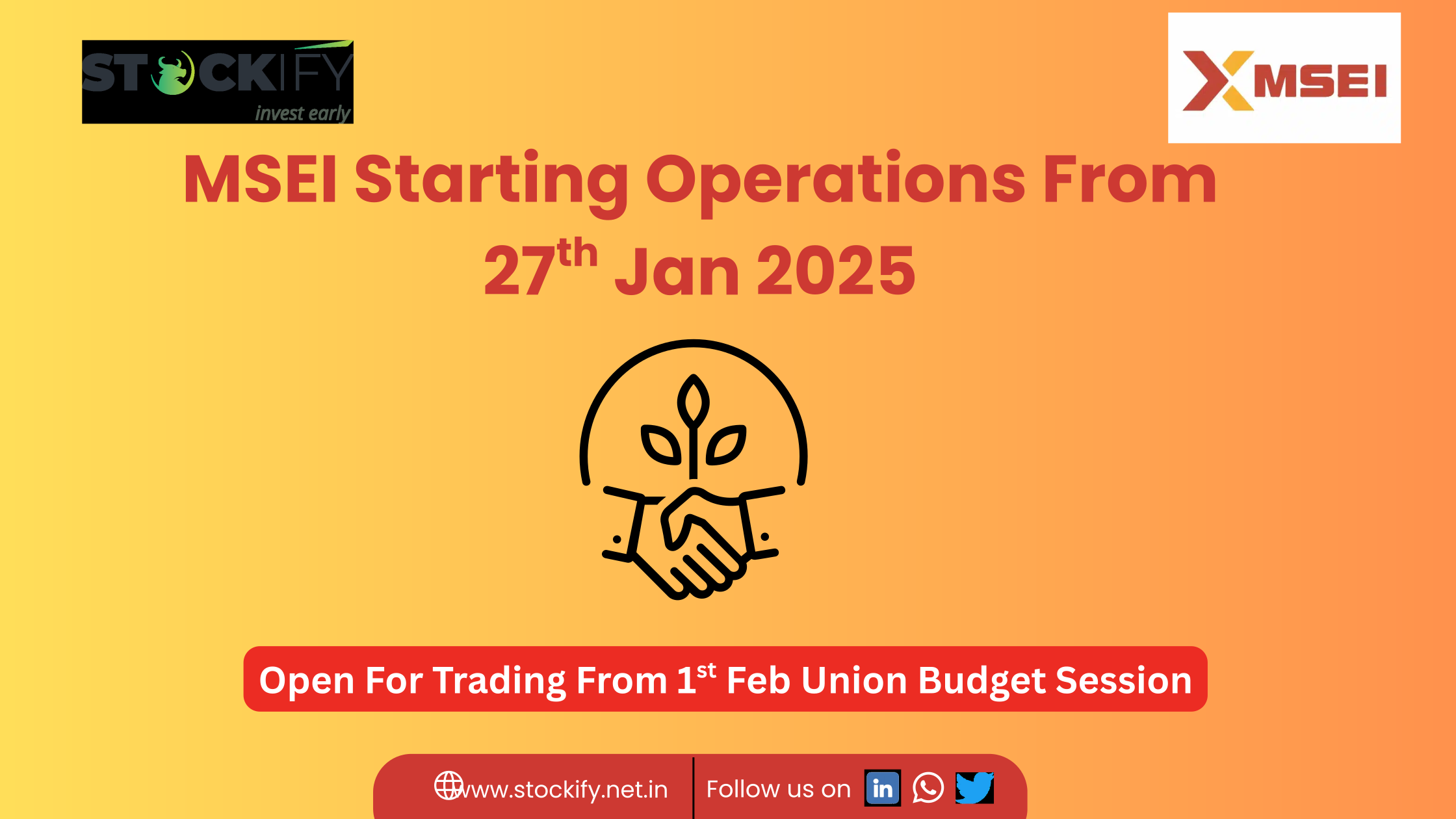
The Metropolitan Stock Exchange of India will remain open for trading on February 1, 2026, the day the Union Budget is presented. The session comes barely days after the exchange resumed operations, making it the first meaningful test of MSEI trading under live and volatile market conditions.
This year’s Budget carries a unique twist. It will be presented on a Sunday for the first time, prompting regulators to keep markets open to avoid a build-up of risk and uncertainty. By participating alongside the National Stock Exchange of India and the Bombay Stock Exchange, MSE is positioning itself as a fully functional venue rather than a symbolic entrant.
Early Days For MSEI
The exchange will start trading operations on January 27, a development that effectively marks the MSEI trading start date after a long period of inactivity. Trading has commenced with a limited universe of 130 stocks, primarily comprising liquid, large-cap names. From a participant’s point of view, the experience on the MSEI trading platform is meant to mirror existing exchanges, with familiar order types, timings, and settlement cycles.
To support activity during the initial phase, MSE has implemented a liquidity support framework using designated market makers. This structure becomes particularly relevant during events like the Budget, when price reactions can be sharp, and order flow can become one-sided within minutes.
Why Does Budget Day Matter?
Budget Day is not a routine trading session. Policy announcements on taxes, capital spending, borrowing, and sector incentives often lead to fast repricing across banks, infrastructure, consumption, and financial stocks. For an exchange that has only just restarted, handling such conditions smoothly is essential.
Market participants will watch closely how spreads behave, how quickly orders are matched, and whether price discovery remains orderly. Early MSEI trading volume numbers on February 1 will offer clues on whether brokers and traders are willing to route orders through the exchange during high-impact events.
Positioning In A Concentrated Market
India’s equity market remains heavily concentrated, with most activity flowing through a single exchange and a smaller share through the second. Liquidity tends to follow established habits, which makes it difficult for new or returning platforms to gain relevance quickly.
MSE’s strategy appears incremental. Rather than chasing immediate scale, it is focusing on stability and differentiation. Its flagship SX40 index offers an alternative large-cap benchmark, and over time, the exchange plans to expand MSEI trading derivatives linked to this index. Regulatory rules allow different expiry days, which could help avoid direct competition in the most crowded segments.
MSEI Unlisted Share Rallying Like Never Before
The MSEI share price action has been hard to ignore. In just one week, the share price jumped from Rs. 3.85 on 10 January to Rs. 7.5 on 19 January, almost a 2x. And within a month, it almost doubled, from Rs. 3.5 on 22 December to Rs. 7.5 by 19 January. When an unlisted share rises this fast, it usually means the market has picked up strongly.
The current jump is mainly built on 3 pillars:
MSEI may restart trading operations by the end of Jan 2026
SEBI approved Liquidity Enhancement Scheme (LES)
Massive capital raised and utilised (Rs.1,240 crore), giving it financial strength.
Read More Here: MSEI Share Price Doubles In 1 Week: What’s Happening?
You may also like to read

What Are The Different Classes Of Shares Issued In India?

Different Classes of Assets In The Financial Market

Follow These Simple Share Market Tips While Investing

Importance of Investing in Unlisted Shares

Step-by-step Process Of Transferring Unlisted Shares (Off-market)

Pre IPO Success Stories To Start Your Unlisted Share Trading

What Is The Expected Return Of Unlisted Shares?

A Detailed Guide On How To Buy Unlisted Shares In India

Know Your Tax Implications Before Investing In Unlisted Shares

Common Mistakes To Avoid While Investing In Unlisted Shares
How To Pick Best Performing Unlisted Stocks in India?

Risks And Rewards Associated With Unlisted Share Investment

Difference Between Start-Up Investing And Unlisted Shares?

IPO Process in India: Key Steps Explained Clearly

Revealed: The Real Picture of Unlisted Shares in Grey Market

Key Financial Ratios And How To Use Them To Analyse Your Investment

101 Guide For Beginners: What Is Pre IPO Share Market?

10 Golden Rules Of Investing In Stock Market

Listed Shares Vs. Unlisted Shares - Detailed Comparison

The Dark Side of Paytm's IPO Explained In Details

What Leads to Delisting of Shares and What Goes Behind The Scenes?

When Should You Review Your Portfolio Professionally?

In-Depth Analysis of Pre-IPO Shares for Portfolio Growth

PharmEasy Unlisted Price Falls 70%. Here's why
Delaying Pre-IPO Investments? Here’s What You Risk

An NRI’s Guide To Invest In Unlisted Shares In India

Guide To Filter The Most Profitable Unlisted Companies In India

A Comprehensive Guide On Follow-on Stocks

Care Health Insurance

Smart Strategy to Buy & Sell Unlisted Shares Professionally

Top Highly Profitable Unlisted Companies In India To Look For As An Investor

Upcoming IPOs In 2022-2023

Expert’s Driven Roadmap To Research A Startup IPO

Capgemini Unlisted Shares: Is The Risk Worth?

HDFC Sec vs HDB Financial: Which Is the Better Pick?

Detailed Guide To Calculate Capital Gains on Unlisted Shares

Dematerialisation of Unlisted Shares and Its Impact On Shareholders

How are B9 Beverages Pvt Ltd (Bira91) Unlisted Shares Gaining Pace Again?

Reliance Retail: The Success Story of India's Largest Retail Brand

The Future Of Unlisted Shares In the Fintech Market
Employee Stock Ownership Plan: What, How, and Why?

Studds Unlisted Shares: 6 Reasons to Buy Now

LAVA’s Unlisted Shares Soar Under Atmanirbhar Push
NSE vs BSE: Detailed 101 Market Share Comparison

The Role Of Corporate Governance And Management In Unlisted Companies

What's Temperature Ahead Of Tata Technologies' ₹4,000 Cr. IPO?

The Future Outlook For Unlisted Shares As An Investment Option

How to Buy and Sell Unlisted Shares in India?

The Benefits And Drawbacks Of Investing In Unlisted Shares