


Table of Contents
Buy/Sell Your Unlisted Shares
Submit the details below to share a quote.
NSE, India’s largest stock exchange is moving closer to a long-awaited public listing. Recent developments suggest that the NSE has already appointed around 20 merchant bankers to manage the IPO. While the NSE IPO listing timeline has not been officially confirmed, market participants are closely watching how the valuation could place NSE among India’s most valuable listed companies. Hence, the upcoming NSE IPO is drawing strong attention from investors. Let’s discuss reason of NSE IPO in detail.
NSE IPO Valuation Could Be Among India’s Largest
Based on the current NSE unlisted share price, the NSE IPO could value the exchange at roughly Rs. 4.7-5 lakh crore. Now, if it is valued at this, then the company would likely enter the group of India’s top 15 companies by market capitalisation. Whereas, if the exchange eventually seeks a higher valuation of around Rs. 6-7 lakh crore, then the NSE IPO could enter the top 10 companies in India by market value. However, the final position will depend on the NSE IPO price band and overall market conditions at the time of NSE IPO listing.
Therefore, while comparing this valuation perspective, the lower end of the top-15 market-cap list currently begins around Rs. 3.77 lakh crore, where companies like Mahindra & Mahindra are positioned. At the top of the list, Reliance Industries is there, which likely have market value commanding nearly Rs. 18.87 lakh cr. So even at the lower estimate, NSE would likely be bigger than many Nifty companies immediately after listing.
NSE IPO Will Likely Be an OFS Structure
According to Business Standard, the NSE IPO is expected to be largely structured as an offer for sale (OFS). It means that existing shareholders will share, and NSE might not raise fresh capital. The main NSE shareholders include LIC (10.72%), SBI ( 3.23%) and SBI Capital Markets (4.3%). These investors are likely expected to partially exit during the IPO. Hence, existing shareholders might be expected to sell around 4.5-5% stake in the exchange through the public issue. This would make it one of the largest IPOs in India, similar to recent years' listings.
IPO | Raised( in Rs. in cr) |
Hyundai Motor India | 27,858 |
LIC | 20,557 |
Paytm | 18,300 |
At current valuation estimates, the NSE IPO size is expected to be around Rs. 21,000- Rs.25,000 cr. This could be compared with large listings in recent years include Hyundai Motor India, which raised nearly Rs. 27,858 crore in FY24, and Life Insurance Corporation of India, which raised over Rs. 20,557 crore in FY22.
Why NSE IPO Is So Important?
The main reason the NSE IPO is getting strong attention is the strong leadership position in the Indian trading system. Basically, it acts as the core infrastructure of India’s stock market. So NSE dominated the market, having around 93% cash market share, showing its dominant position in equity trading, whereas having around 57% F&O market share.
Globally, the NSE has ranked among the largest derivatives exchanges by contracts traded. This reflects that the growth of India’s retail and institutional trading activity has been rapidly increasing in recent years. Hence, business model might be strong as in India every trade generates transaction fees
NSE Financials Overview
Particulars( inRs. cr.) | FY26 (9M) | FY25 |
PAT | 7,431 | 9,538 |
Total income | 13,354 | 14,780 |
Despite being dominating the market positions, some fluctuations have been seen in NSE’s recent financials. The profits dropped by 22%. For the first 9 months of FY26, PAT was about Rs.7,431 cr, compared with around Rs.9,538 crore in FY25. Total income during FY26 (9M) was approximately Rs.13,354 crore, reduced from Rs.14,780 crore in FY25.
The possible reasons for the decrease in profits can be the restrictions of SEBI earlier, the derivatives regulation or market volatility. SEBI changed the derivatives regulation, likely to protect retail investors and reduce excessive F&O trading. Now, regulations possibly impacted profits, since F&O generates more revenue for NSE. But even after the drop, profits might remain huge.
Is The NSE Unlisted Share Still In Demand?
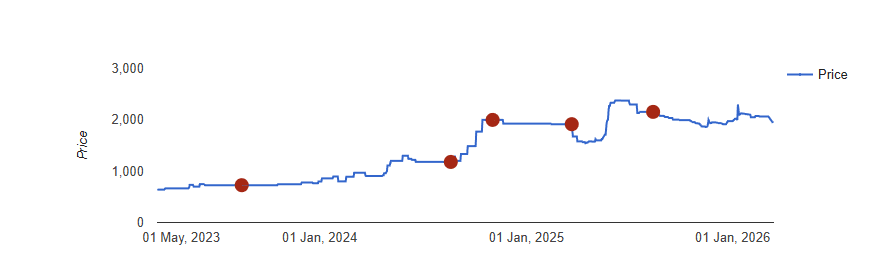
The NSE unlisted share price had approx 200% increase in 3 years. In March FY23, the price was around Rs. 639 in the unlisted market. In May FY24, prices increased to roughly Rs. 1200 per share, reflecting the growth of nearly 87%.The current unlisted price is around Rs.1975.49 per share, with a market cap of roughly Rs. 5.22 lakh crore.
Hence, strong demand is likely to be seen despite market volatility. As the NSE IPO moves closer to a listing, investors are likely to watch developments around regulatory approvals, valuation discussions, and the eventual NSE IPO timeline. Possible reason of demanding can be its dominant presence, exchange business can be having low operating costs and demat accounts crossed roughly 15cr. It shows massive trading growth in India. Overall, the final outcome will depend on regulatory clearances, market conditions, and the valuation that investors ultimately assign to the exchange when it comes to the primary market.
You may also like to read

What Are The Different Classes Of Shares Issued In India?

Different Classes of Assets In The Financial Market

Follow These Simple Share Market Tips While Investing
Importance of Investing in Unlisted Shares

Pre IPO Success Stories To Start Your Unlisted Share Trading

Step-by-step Process Of Transferring Unlisted Shares (Off-market)

What Is The Expected Return Of Unlisted Shares?

Common Mistakes To Avoid While Investing In Unlisted Shares
Know Your Tax Implications Before Investing In Unlisted Shares
How To Pick Best Performing Unlisted Stocks in India?

A Detailed Guide On How To Buy Unlisted Shares In India

Risks And Rewards Associated With Unlisted Share Investment
Difference Between Start-Up Investing And Unlisted Shares?

IPO Process in India: Key Steps Explained Clearly

Revealed: The Real Picture of Unlisted Shares in Grey Market
Key Financial Ratios And How To Use Them To Analyse Your Investment

10 Golden Rules Of Investing In Stock Market

101 Guide For Beginners: What Is Pre IPO Share Market?
Listed Shares Vs. Unlisted Shares - Detailed Comparison
The Dark Side of Paytm's IPO Explained In Details

What Leads to Delisting of Shares and What Goes Behind The Scenes?

When Should You Review Your Portfolio Professionally?

In-Depth Analysis of Pre-IPO Shares for Portfolio Growth

PharmEasy Unlisted Price Falls 70%. Here's why
Delaying Pre-IPO Investments? Here’s What You Risk

An NRI’s Guide To Invest In Unlisted Shares In India

Guide To Filter The Most Profitable Unlisted Companies In India

A Comprehensive Guide On Follow-on Stocks

Smart Strategy to Buy & Sell Unlisted Shares Professionally

Care Health Insurance

Top Highly Profitable Unlisted Companies In India To Look For As An Investor

Upcoming IPOs In 2022-2023

Capgemini Unlisted Shares: Is The Risk Worth?

Expert’s Driven Roadmap To Research A Startup IPO

HDFC Sec vs HDB Financial: Which Is the Better Pick?

Detailed Guide To Calculate Capital Gains on Unlisted Shares

Dematerialisation of Unlisted Shares and Its Impact On Shareholders

How are B9 Beverages Pvt Ltd (Bira91) Unlisted Shares Gaining Pace Again?

Reliance Retail: The Success Story of India's Largest Retail Brand

The Future Of Unlisted Shares In the Fintech Market
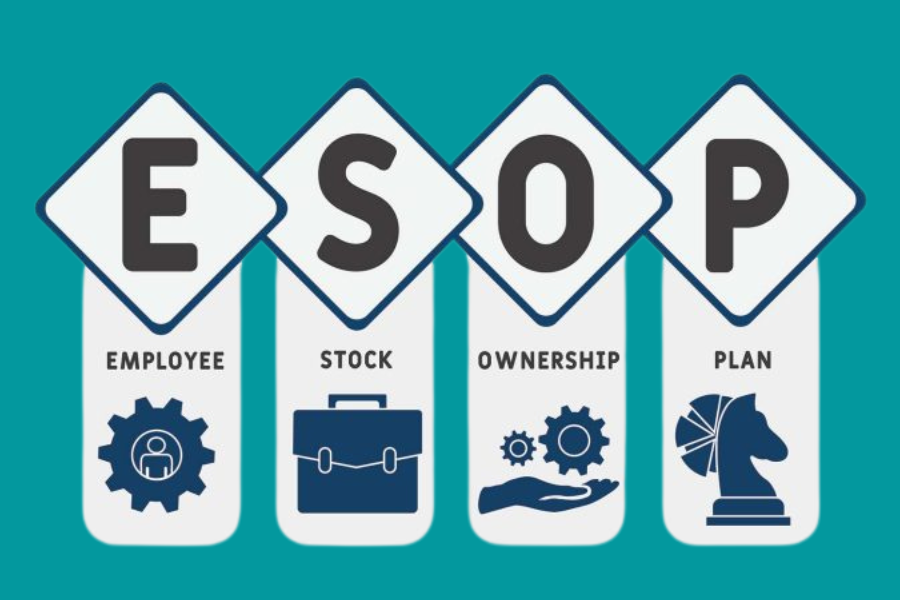
Employee Stock Ownership Plan: What, How, and Why?

Studds Unlisted Shares: 6 Reasons to Buy Now

LAVA’s Unlisted Shares Soar Under Atmanirbhar Push
NSE vs BSE: Detailed 101 Market Share Comparison

The Role Of Corporate Governance And Management In Unlisted Companies

The Future Outlook For Unlisted Shares As An Investment Option

How to Buy and Sell Unlisted Shares in India?

The Benefits And Drawbacks Of Investing In Unlisted Shares
What's Temperature Ahead Of Tata Technologies' ₹4,000 Cr. IPO?