

1.jpg)
Table of Contents
Buy/Sell Your Unlisted Shares
Submit the details below to share a quote.
TL;DR
Paytm Payment Bank can no longer conduct banking business due to non-compliance and regulatory issues.
Introduction
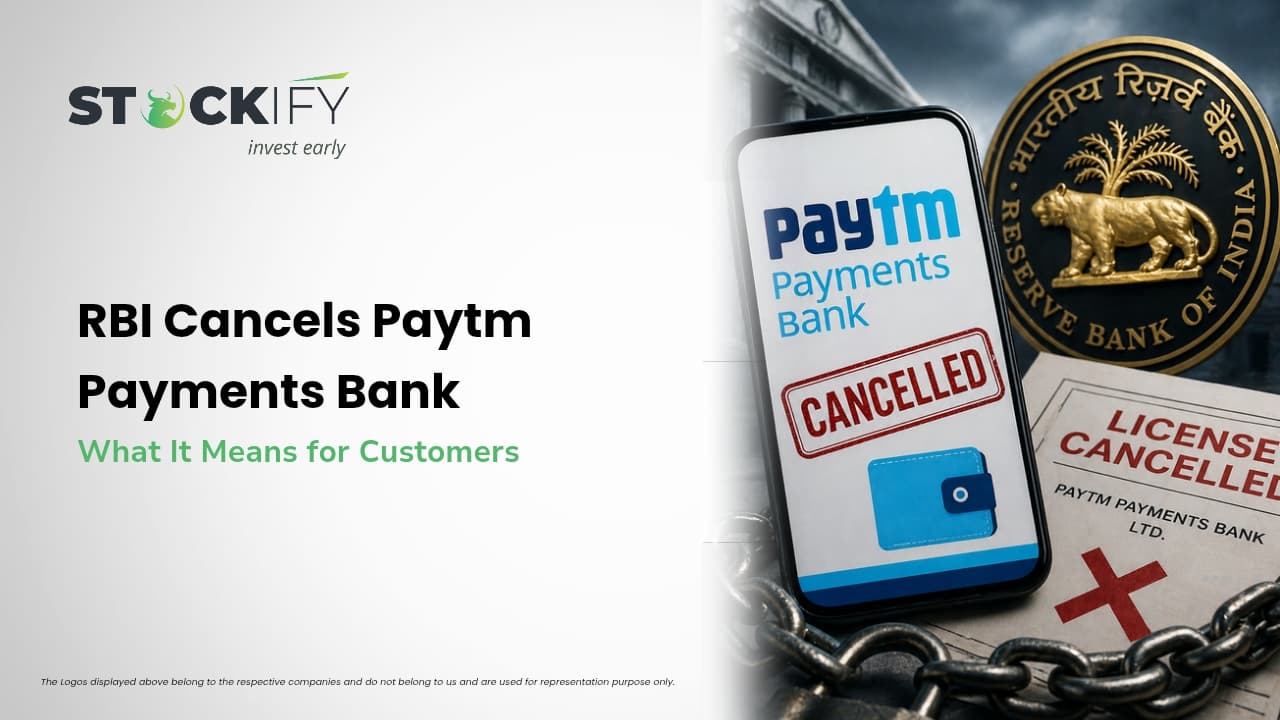
Marking a history as a major action, the RBI- Reserve Bank of India cancelled the banking license of Paytm payment bank. It happened due to non-compliance and regulatory issues. Once a well known fintech company in India has fallen to zero for its banking operations.
The move and the checking issues were already in line by RBI from 2024. Since then, strict restrictions were imposed due to persistent supervisory concerns.
For users the big question is what will happen now to wallets, balance, FASTags and other related services associated with payment Paytm banks. The answer can be understood from both 2024 restrictions and the latest 2026 license cancellation.
Why RBI Cancelled Paytm Payments Bank License
According to reports, RBI cancelled the banking license of Paytm Payments Bank with effect from April 24, 2026. These are the reasons why this happened:
The regulator cited serious governance, compliance, and depositor interest concerns. They also mentioned that Paytm will no longer be allowed to carry out banking services. (Source: BFSI ET)
Cancelling the license is not a sudden action. But it was in process since 2024, when RBI had identified and acted against persistent and serious supervisory concerns.
It had barred the bank from onboarding new customers. Later, they tightened restrictions on deposits, top-ups, and credit transactions.
What Actually Happened in 2024 with Paytm Payment Bank
Paytm Payments Bank had already been operating under severe limitations. In February 2024, RBI clarified that customers could access their account and continue to use, withdraw, or transfer funds only up to the available balance in their accounts.
The RBI strictly laid directions to bar fresh deposits after March 15, 2024. However, this does not apply to limited credits such as interest, cash-backs, sweep-ins from partner banks, or refunds. This indicates that the bank’s ability to function as a normal payment bank had already been revoked long back.
The same restrictions were extended to wallets, FASTags, and National Common Mobility Cards issued by Paytm Payment Bank.
What Does License Cancellation Means for Customers
If you are a former or a remaining user of Paytm payments bank, the practical meaning is simple: this bank can no longer function as a bank. RBI’s order prohibited it from conducting the business of banking with immediate effect from April 24, 2026.
For customers the issue is with the continuity of service.
If you have got this, it is the best indication that you move away from the platform’s banking layer and make alternative arrangements through other banks.
This is especially important for people who use a bank account for salary credits, automated bill payments, subscriptions, or everyday spending. Now cancellation has made it important for users to migrate their banking platform.
What About Paytm App and UPI?
Paytm payment bank is not the same thing as the broader Paytm App. The banking entity is separate from the larger Paytm ecosystem, even though users often experience them as a part of one platform.
That means not every Paytm service should automatically be assumed to stop in the same way. However, any feature directly tied to Paytm payment bank deserves careful review, especially if it involves balances, credits, stored-valued instruments, or settlement functions.
Why Does This Story Matters Beyond Paytm?
The fall of Paytm payment bank is bigger than one company. It sends a clear message that in India’s financial system, growth, brand recognition, and digital reach do not replace regulatory compliance.
For the fintech industry, this is a reminder that the business is scaled not only on the basis of convenience but also through clean governance practice, KYC, and regulatory discipline. And RBI is quite strict about it.
For users it is a lesson in diversification. Depending too heavily on a single payments ecosystem can create disruption when regulatory action hits one part of the stack.
What Users Should Do Now
If your finances are connected to Paytm payment bank service, these are the immediate steps worth taking:
Check whether you still have any balance, wallet value, or linked instrument associated with the bank.
Shift salary credits, subscriptions, auto-debits and bill payments to another bank account.
Replace any FASTag or prepaid instrument tied to the bank if it is still active in your routine.
Follow official announcements from RBI and Paytm for final settlement, migration, and user guidance.
Conclusion
The RBI’s cancellation of Paytm Payment Bank license marks a major regulatory turning point and ends a long period of uncertainty for users. For customers the key takeaway is to move linked balances, mandates, wallets, and FASTags to safer alternatives without delay.
FAQ
Why did RBI cancel Paytm Payment Bank license?
RBI cancelled the license because the bank affairs were carried out in a manner unfavourable for the depositors.
Can customers still deposit money to Paytm Payment Bank accounts?
No. RBI already said that after March 15, 2024 customers will not be able to deposit money or receive credits in their account.
Could users still withdraw money?
You need to check with the latest update and information released by RBI or Paytm.
Is Paytm the same as Paytm Payments Bank?
No. Paytm Payments Bank is the regulated banking entity, while Paytm App is a part of the wider payments ecosystem.
You may also like to read

What Are The Different Classes Of Shares Issued In India?

Different Classes of Assets In The Financial Market

Follow These Simple Share Market Tips While Investing

Importance of Investing in Unlisted Shares

Pre IPO Success Stories To Start Your Unlisted Share Trading

Step-by-step Process Of Transferring Unlisted Shares (Off-market)

What Is The Expected Return Of Unlisted Shares?

Common Mistakes To Avoid While Investing In Unlisted Shares

Know Your Tax Implications Before Investing In Unlisted Shares

How To Pick Best Performing Unlisted Stocks in India?

A Detailed Guide On How To Buy Unlisted Shares In India

Risks And Rewards Associated With Unlisted Share Investment

Difference Between Start-Up Investing And Unlisted Shares?

IPO Process in India: Key Steps Explained Clearly

Revealed: The Real Picture of Unlisted Shares in Grey Market

Key Financial Ratios And How To Use Them To Analyse Your Investment

10 Golden Rules Of Investing In Stock Market

101 Guide For Beginners: What Is Pre IPO Share Market?

Listed Shares Vs. Unlisted Shares - Detailed Comparison

The Dark Side of Paytm's IPO Explained In Details

What Leads to Delisting of Shares and What Goes Behind The Scenes?

When Should You Review Your Portfolio Professionally?

In-Depth Analysis of Pre-IPO Shares for Portfolio Growth

PharmEasy Unlisted Price Falls 70%. Here's why

Delaying Pre-IPO Investments? Here’s What You Risk

An NRI’s Guide To Invest In Unlisted Shares In India

Guide To Filter The Most Profitable Unlisted Companies In India

A Comprehensive Guide On Follow-on Stocks

Smart Strategy to Buy & Sell Unlisted Shares Professionally

Care Health Insurance

Top Highly Profitable Unlisted Companies In India To Look For As An Investor

Upcoming IPOs In 2022-2023

Capgemini Unlisted Shares: Is The Risk Worth?

Expert’s Driven Roadmap To Research A Startup IPO

HDFC Sec vs HDB Financial: Which Is the Better Pick?

Detailed Guide To Calculate Capital Gains on Unlisted Shares

Dematerialisation of Unlisted Shares and Its Impact On Shareholders

How are B9 Beverages Pvt Ltd (Bira91) Unlisted Shares Gaining Pace Again?

Reliance Retail: The Success Story of India's Largest Retail Brand

The Future Of Unlisted Shares In the Fintech Market
Employee Stock Ownership Plan: What, How, and Why?

Studds Unlisted Shares: 6 Reasons to Buy Now

LAVA’s Unlisted Shares Soar Under Atmanirbhar Push
NSE vs BSE: Detailed 101 Market Share Comparison

The Role Of Corporate Governance And Management In Unlisted Companies

The Future Outlook For Unlisted Shares As An Investment Option

How to Buy and Sell Unlisted Shares in India?

The Benefits And Drawbacks Of Investing In Unlisted Shares

What's Temperature Ahead Of Tata Technologies' ₹4,000 Cr. IPO?