


Table of Contents
Buy/Sell Your Unlisted Shares
Submit the details below to share a quote.
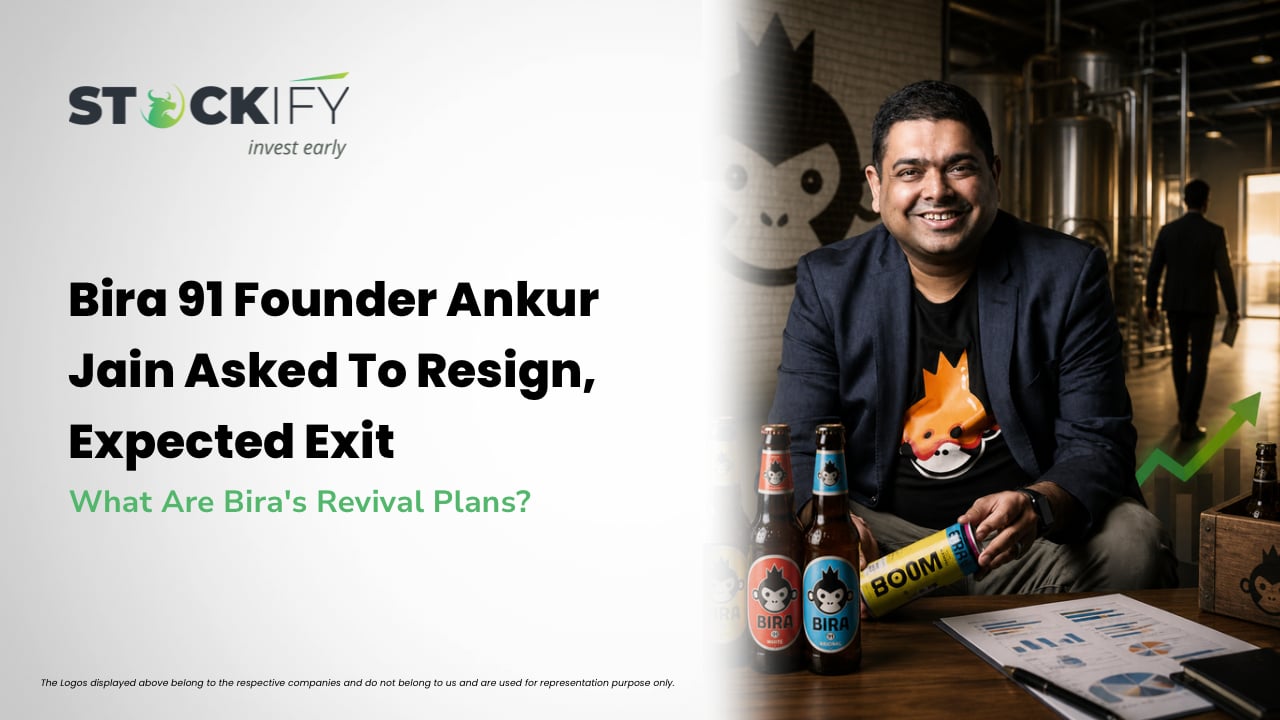
The Ankur Jain Bira journey might no longer be just about a cool beer brand. It’s about what happens when rapid growth starts cracking from within. Bira 91 now stands at a critical turning point. Now the big question is, can it come back, or is this the beginning of the end? Let’s discuss in detail.
Bira Revival Plan
B9 Beverages, the company behind Bira 91, might now be entering a critical revival phase after months of financial stress. According to Mint, investors are planning to infuse around Rs 400 cr, with an additional Rs 100 cr option, to stabilise operations and clear pending liabilities. This funding will likely come at a reduced valuation, a sharp reset from its last known valuation of $625 million in early FY24. The primary goal can simply be to restart operations, pay off dues, and bring the business back on track. At the same time, investors are pushing for a management overhaul. Now, this could be reflecting a shift to investor-controlled execution.
Who is running Bira now?
As part of the restructuring, founder & CEO Ankur Jain is expected to exit. While the company has not officially announced a replacement yet, reports indicate that a new external CEO will likely be appointed soon. This leadership change can be crucial. Investors are looking for someone who can stabilise finances, improve operational efficiency, and drive profitability instead of just growth. Therefore, the new CEO’s role will likely be more about fixing the fundamentals of the company.
Bira Dealing with Financial Challenges
Bira91's financial problems might not emerge overnight. These challenges might have been building for some time. The company’s financials clearly show the stress, with revenue falling to Rs. 668.2 cr in FY24 from Rs. 848.7 cr in FY23, down by 22%. While losses widened sharply to Rs 748.8 cr in FY24 compared to Rs 445.4 cr in FY23. The situation worsened as Bira 91 reportedly halted operations around September FY25, signalling deeper core operational issues. At the same time, months of delayed salaries triggered employee protests, while vendors and creditors increased pressure on the company, with some cases even reaching the National Company Law Tribunal.
What Likely Caused Bira 91's financial crisis?
A. The “name-change” regulatory disaster
Around FY22-23, B9 Beverages dropped the word “Private” from its name, effectively becoming a new legal entity across India’s highly fragmented liquor licensing system. That one move triggered a supply chain. Licenses had to be reapplied for, labels re-registered, and approvals redone across states. For a business dependent on state permissions, this meant months of halted sales and disrupted operations. Now, here, the Demand might not have fallen, but the system temporarily shut Bira91 out.
B. Overexpansion and cash-burn
The company had expanded aggressively to more than 550 towns in 18 countries, with heavy marketing spends and its own breweries. The issue was that many of these facilities reportedly operated at very low utilisation. This could mean high fixed costs with limited output. Despite raising over $250 million, the business never reached sustainable profitability. It was growth, but growth likely funded by a constant cash burn.
C. Governance and employee unrest
Cash flows tightened, vendor payments and salaries were delayed, and operations began to slip. Over Rs 50 cr in dues piled up, headcount dropped from above 700 to 260, and more than 250 employees even pushed for a leadership change
About the Bira 91
Founded in 2015, Bira 91 quickly became one of India’s most recognisable premium beer brands. Bira91 is backed by investors like Peak XV Partners, Sofina, and Kirin Holdings. The company positioned itself as a trendy, urban alternative in the alc-beverage market. However, despite strong branding and rapid expansion, profitability remained elusive.
How Ankur Blew It with Bira?
The Ankur Jain Bira journey could reflect strong branding but weak execution. A few possible strategic missteps seem to have played a role:
1. Over-expansion without profitability
Bira scaled aggressively across markets, bars, retail, and even its own breweries, backed by over Rs 2,000 crore in funding. But there was rapid scaling but weak unit economics.
2. High cash burn:
The company ran on heavy marketing spends, global experiments, and a bloated cost structure. It became a classic “high-visibility, high-spend” startup, where growth was driven more by capital than by sustainable margins.
3. Operational inefficiencies
Production and supply chain issues added to the pressure. Breweries were reportedly underutilised, sometimes running far below capacity.
4. Funding dependency
Despite raising large amounts of capital, the business never turned profitable. It became dependent on continuous funding to survive.
5. Founder-centric control & governance cracks:
Leadership became too centralised around Ankur Jain, with limited checks and balances. As the crisis deepened, delayed salaries and unpaid dues exposed governance issues, eroding trust among employees, vendors, and investors.
In the end, this might not be about demand failing. It could be about execution failing the brand.
Can Bira Make a Comeback?
Bira might come back, but it won’t be easy. By mid FY25, B9 Beverages has already restarted in parts, getting approvals in key markets such as Delhi and Uttar Pradesh, resuming limited production, and tightening leadership and costs. Fresh funding and a reset are possible to help in a comeback. But the major challenges are likely to be fixing cash flow, rebuilding trust, and staying competitive.
Also Read: Bira 91 Crises Deepens, Founder Ankur Jain Steps Aside
You may also like to read
What Are The Different Classes Of Shares Issued In India?

Different Classes of Assets In The Financial Market

Follow These Simple Share Market Tips While Investing
Importance of Investing in Unlisted Shares

Step-by-step Process Of Transferring Unlisted Shares (Off-market)

Pre IPO Success Stories To Start Your Unlisted Share Trading

What Is The Expected Return Of Unlisted Shares?

A Detailed Guide On How To Buy Unlisted Shares In India

Know Your Tax Implications Before Investing In Unlisted Shares
Common Mistakes To Avoid While Investing In Unlisted Shares
How To Pick Best Performing Unlisted Stocks in India?
Risks And Rewards Associated With Unlisted Share Investment
Difference Between Start-Up Investing And Unlisted Shares?

IPO Process in India: Key Steps Explained Clearly

Revealed: The Real Picture of Unlisted Shares in Grey Market
Key Financial Ratios And How To Use Them To Analyse Your Investment

101 Guide For Beginners: What Is Pre IPO Share Market?
10 Golden Rules Of Investing In Stock Market

Listed Shares Vs. Unlisted Shares - Detailed Comparison

The Dark Side of Paytm's IPO Explained In Details

What Leads to Delisting of Shares and What Goes Behind The Scenes?

When Should You Review Your Portfolio Professionally?

In-Depth Analysis of Pre-IPO Shares for Portfolio Growth

PharmEasy Unlisted Price Falls 70%. Here's why
Delaying Pre-IPO Investments? Here’s What You Risk

An NRI’s Guide To Invest In Unlisted Shares In India
Guide To Filter The Most Profitable Unlisted Companies In India

A Comprehensive Guide On Follow-on Stocks

Care Health Insurance

Smart Strategy to Buy & Sell Unlisted Shares Professionally

Top Highly Profitable Unlisted Companies In India To Look For As An Investor

Upcoming IPOs In 2022-2023
Expert’s Driven Roadmap To Research A Startup IPO
Capgemini Unlisted Shares: Is The Risk Worth?

HDFC Sec vs HDB Financial: Which Is the Better Pick?

Detailed Guide To Calculate Capital Gains on Unlisted Shares

Dematerialisation of Unlisted Shares and Its Impact On Shareholders
How are B9 Beverages Pvt Ltd (Bira91) Unlisted Shares Gaining Pace Again?

Reliance Retail: The Success Story of India's Largest Retail Brand

The Future Of Unlisted Shares In the Fintech Market
Employee Stock Ownership Plan: What, How, and Why?

Studds Unlisted Shares: 6 Reasons to Buy Now

LAVA’s Unlisted Shares Soar Under Atmanirbhar Push
NSE vs BSE: Detailed 101 Market Share Comparison

The Role Of Corporate Governance And Management In Unlisted Companies
What's Temperature Ahead Of Tata Technologies' ₹4,000 Cr. IPO?

The Future Outlook For Unlisted Shares As An Investment Option

How to Buy and Sell Unlisted Shares in India?
The Benefits And Drawbacks Of Investing In Unlisted Shares