

Table of Contents
Buy/Sell Your Unlisted Shares
Submit the details below to share a quote.
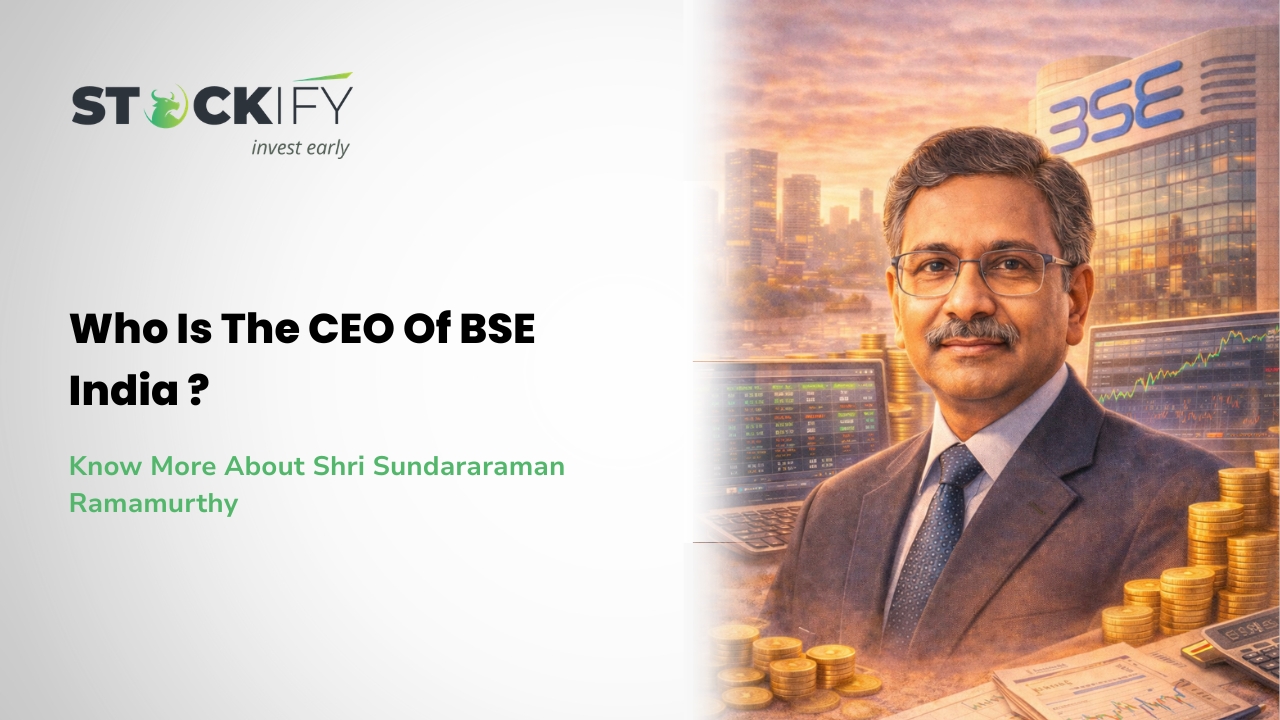
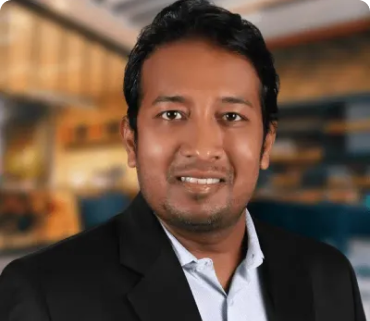
Sundararaman Ramamurthy is currently the Managing Director & CEO of the BSE Ltd (Bombay Stock Exchange). In 2023, BSE Ltd appointed Ramamurthy as its Managing Director and CEO, even though he had spent nearly two decades working at NSE, which is BSE’s biggest competitor.
He has almost four decades of experience in banking, stock exchanges, and capital markets.
Let's discuss in detail his journey.
What is Sundararaman Ramamurthy's professional background before BSE?
Sundararaman Ramamurthy’s academic background is a combination of a science background with deep knowledge of finance and capital markets.He completed his schooling in Chennai, Tamil Nadu.Later on, he did his higher education at the University of Madras and pursued a Bachelor of Science. Here, his major subjects were mathematics, physics, and chemistry.
Though he completed his degree that focuses on science, his interest shifted gradually to finance and banking. So, in order to gain in-depth knowledge in this area of his interest, he pursued several professional qualifications during his career.
One of them was the Cost and Management Accountant (ICWAI) qualification from the Institute of Cost Accountants of India, which focuses on areas like cost control, financial management, and corporate accounting. Also, to gain advanced knowledge of banking operations and financial systems. He did the CAIIB certification from the Indian Institute of Banking and Finance.
Later in his career, he did another certification, Financial Risk Manager (FRM), through the Global Association of Risk Professionals. Basically, it deals with topics such as market risk, credit risk, and financial risk management practices. He also earned a Six Sigma Green Belt certification, showing his commitment to improving management processes and efficiency in operations.
Additionally, he attended executive education programs at institutions like the Indian School of Business and the Kellogg School of Management while strengthening his leadership and management skills.
Career Background
Ramamurthy started his professional journey in the Indian banking sector. During the initial stage of his career, he worked with organisations such as Indian Overseas Bank, State Bank of India, and IDBI Bank.
When he joined the National Stock Exchange in 1995. It was an important turning point in his career. After working at the exchange for almost 20 years, he was eventually promoted to senior vice president.
During his tenure at NSE (1995-2014), he was closely involved in several important areas such as trading infrastructure, exchange operations, derivatives markets, and clearing systems. His work contributed to strengthening the operational framework that supported the rapid growth of electronic trading in India.
After leaving NSE around 2014, he moved into the global banking environment and joined Bank of America as managing director and chief operating officer for India. In January 2023, he was appointed Managing Director and Chief Executive Officer of BSE Ltd., having served in banking and capital market infrastructure for decades.
As the MD and CEO of BSE, Ramamurthy is responsible for guiding the exchange’s strategy, expanding its product offerings and strengthening its technological capabilities. While holding an experience of almost 4 decades, Ramamurthy has gained strong expertise in exchange operations, financial market infrastructure, derivatives trading, and risk management.
Now this will likely make him one of the experienced leaders in India’s capital markets sector.
How did Sundararaman Ramamurthy rebuild BSE Into A 14x Wealth Creation Machine In 3 years?
Under Sundararaman Ramamurthy's direction since January 2023, BSE has developed into a high-growth exchange just behind NSE.
According to the news, his strategies positioned BSE for long-term competition and delivered 14x shareholder returns.
BSE Financials Overview
Revenue increased from Rs.1,371 crore in FY24 to a projected Rs.4,368 crore in FY26 (a 218% increase), while EBITDA margins increased from 28% to 62%.
Due to an eightfold increase in derivatives transaction charges, net profit is expected to increase by 189% to Rs.2,229 crore. With mutual funds at 10.4% (up from 0.3%) and FIIs doubling to 16.7%, institutional ownership increased dramatically.
Market Share Gains
With the introduction of Sensex weekly options in May 2023, the percentage of equity derivatives surged from almost none to 28-30%, challenging the dominance of the NSE.
In order to address bottlenecks and increase ecosystem engagement from brokers, FIIs, and clients, Ramamurthy spoke with 350 brokers early on. The premium turnover for index options was 28.4%.
Tech and Operational Upgrades
The broker can handle up to 67,500 trades per second, and order processing capacity has increased from 10 crore gross orders per second to 1,800 crore.
Fixing income leaks, streamlining compensation, and modernising infrastructure, such as new data centres, resulted in cost savings of Rs.100 crore. They restored confidence and eliminated delayed obstacles.
Particulars (in Rs. Cr.) | Pre-2023 (FY23/FY24) | Projected (FY26) | Growth |
Revenue | 1,371 | 4,368 | 218% |
EBITDA Margin | 28% | 62% | 3,400 bps |
Derivatives Share | 0-13% | 28-30% | Multi-fold |
Why BSE Hired Him Despite His NSE Background?
There were several possible reasons behind this decision:
Ramamurthy had extensive experience in market infrastructure and exchange operations. He has already worked in NSE nearly half a decade. For a rival exchange, this kind of personal knowledge might be quite beneficial.
BSE needed a leader with strong operational expertise rather than just strategic leadership. Ramamurthy might have met the requirements because of his experience in the banking and finance industry over a year.
His experience at the global investment bank Bank of America, where he served as managing director and COO for India, provided him with exposure to international financial markets and global institutional investors. This perspective is crucial for an exchange that aims to boost participation from both domestic and international market participants.
He gained exposure to foreign financial markets and international institutional investors during his tenure as managing director and COO for India at the global investment bank Bank of America. Hence, this viewpoint is important for an exchange that seeks to increase involvement from both domestic and foreign market participants.
He was probably seen by the board and regulators as someone who could challenge NSE's dominance, particularly in derivatives trading, and bring fundamental changes to BSE.
FAQs
What was Sundararaman Ramamurthy's role at NSE?
From 1995 to 2014, he was a member of the founding team of NSE. As Senior VP at NSE Clearing and head of new products at NSE Data & Analytics, he contributed to the development of trading, clearing, and settlement systems.
What changes has Ramamurthy brought to BSE since joining?
He boosted BSE's derivatives share from almost nil to 28-30% with Sensex weekly options. BSE shares increased 14x, revenue increased from ₹1,371 Cr (FY24) to ₹4,368 Cr (FY26), and tech capacity reached 1,800 Cr orders/second.
What are Ramamurthy's views on STT hike and F&O trading?
He believes that the STT rise will discourage speculating and encourage long-term investing. After the first shock, markets adjust, volumes stabilise over time, and generally the shift is positive.
What are key challenges faced by BSE during his tenure?
The key challenges faced by Ramamurthy are competing with NSE's 90% above dominance, SEBI's warning about compensation, and surveillance problems with derivatives, such as price spikes. Closed gaps in the broker ecosystem, technology, and compliance.
What are Ramamurthy's views on FII attraction measures in Budget?
FIIs will be drawn to the budget's manufacturing push and capital expenditures. He views not depend on just one. Municipal bonds and other options are helpful, and inflows are aided by the expansion of the economy.
How does Ramamurthy think STT hike impacts foreign flows?
Ramamurthy thinks the STT hike impacts foreign flows as Long-term equity trades are encouraged; arbitrage may move to stocks and banks. Judge FIIs on production and infrastructure as a whole, not just one move. Reactions are temporary.
Ramamurthy's comments on NSE IPO approval?
NO direct quote was given by him. As the head of the BSE, he supports strict control through merchant bankers and monitors to encourage investor confidence. Market confidence is increased, likely by the NSE IPO.
Impact of Budget 2026 on BSE market share
STT's short-term F&O decline, but BSE's expanding derivatives benefit from a long-term equity shift. Growth and capex maintain the trajectory's strength.
You may also like to read

What Are The Different Classes Of Shares Issued In India?

Different Classes of Assets In The Financial Market

Follow These Simple Share Market Tips While Investing
Importance of Investing in Unlisted Shares

Pre IPO Success Stories To Start Your Unlisted Share Trading

Step-by-step Process Of Transferring Unlisted Shares (Off-market)

What Is The Expected Return Of Unlisted Shares?

Common Mistakes To Avoid While Investing In Unlisted Shares

Know Your Tax Implications Before Investing In Unlisted Shares
How To Pick Best Performing Unlisted Stocks in India?

A Detailed Guide On How To Buy Unlisted Shares In India
Risks And Rewards Associated With Unlisted Share Investment

Difference Between Start-Up Investing And Unlisted Shares?

IPO Process in India: Key Steps Explained Clearly

Revealed: The Real Picture of Unlisted Shares in Grey Market

Key Financial Ratios And How To Use Them To Analyse Your Investment

10 Golden Rules Of Investing In Stock Market

101 Guide For Beginners: What Is Pre IPO Share Market?
Listed Shares Vs. Unlisted Shares - Detailed Comparison
The Dark Side of Paytm's IPO Explained In Details

What Leads to Delisting of Shares and What Goes Behind The Scenes?

When Should You Review Your Portfolio Professionally?

In-Depth Analysis of Pre-IPO Shares for Portfolio Growth

PharmEasy Unlisted Price Falls 70%. Here's why

Delaying Pre-IPO Investments? Here’s What You Risk

An NRI’s Guide To Invest In Unlisted Shares In India

Guide To Filter The Most Profitable Unlisted Companies In India

A Comprehensive Guide On Follow-on Stocks

Smart Strategy to Buy & Sell Unlisted Shares Professionally

Care Health Insurance

Top Highly Profitable Unlisted Companies In India To Look For As An Investor

Upcoming IPOs In 2022-2023

Capgemini Unlisted Shares: Is The Risk Worth?

Expert’s Driven Roadmap To Research A Startup IPO

HDFC Sec vs HDB Financial: Which Is the Better Pick?

Detailed Guide To Calculate Capital Gains on Unlisted Shares

Dematerialisation of Unlisted Shares and Its Impact On Shareholders

How are B9 Beverages Pvt Ltd (Bira91) Unlisted Shares Gaining Pace Again?

Reliance Retail: The Success Story of India's Largest Retail Brand

The Future Of Unlisted Shares In the Fintech Market
Employee Stock Ownership Plan: What, How, and Why?

Studds Unlisted Shares: 6 Reasons to Buy Now

LAVA’s Unlisted Shares Soar Under Atmanirbhar Push
NSE vs BSE: Detailed 101 Market Share Comparison

The Role Of Corporate Governance And Management In Unlisted Companies

The Future Outlook For Unlisted Shares As An Investment Option

How to Buy and Sell Unlisted Shares in India?

The Benefits And Drawbacks Of Investing In Unlisted Shares
What's Temperature Ahead Of Tata Technologies' ₹4,000 Cr. IPO?