

As of March 2022, retail investors, high-net-worth individuals and domestic institutional investors held a 23.34% ownership in total in NSE stocks. This is an all-time high and depicts the growing trend of stock trading in India and is reflected in multiple growths in the number of DEMAT accounts. As more individuals join the onboard to make long-term investments, a good understanding of stock market indicators and terminologies becomes crucial to obtain a competitive edge. Moreover, it is essential to know this aspect in detail to stay abreast of various developments and risk factors.
This blog will cover several stock market terminologies to help you grasp the knack for trading stocks with good returns.
Most Important Terms Used In Stock Market
How many times have you found yourself left puzzled by a word when you are reading an article to explore some shares with high return potentials? You might have wanted to go through a detailed analysis of NSE shares, but your research came to a halt when you came across terms like IPO, bonds, DRHP, etc. When you don’t have a clear idea of what these terms mean, it will surely hamper your readability. Therefore, we will start with the most common and essential terminologies in the Stock market.
Stocks
Are stocks and shares the same things? To answer your question, stocks and shares have similar meanings but slightly different contexts. Let's dive deep into their meaning to understand that in detail.
Shares or Stocks are part of ownership in a company. When a founder invites individuals or groups to invest in the company, he allows some shares to be bought.
Stocks have a more general meaning and often indicate part-ownership in a company. That means when you say he wants to buy stocks of Tata Technologies, it means the guy owns some of the company’s stocks.
Now, shares have more specific meanings and refer to the percentage ownership in the enterprise. Numbers and figures often follow shares as it is a quantity. If a company has 10,000 equity shares, and you buy ten shares, you own 1% of the company’s stocks. Equity shares is another term with the same meaning that is commonly used.
Bonds
When a borrower wants to borrow a fixed amount from the lender, borrowers issue bonds. Bonds are a fixed-income instrument that allows investors to raise money. These come with less risk exposure and are beneficial for investors who want to avail assured returns. When the government issues a bond at a fixed rate, it is called a government bond. On the contrary, stocks come with no assurance, and their prices are fluid and subject to market risks. That said, stocks (or shares) have the features bonds don’t. Stocks can bring high returns to buyers if the company performs well and market conditions are favourable.
Bonds will return you a fixed value, but factors like inflation can decrease the value of that amount. For instance, let’s say you lend Rs. 80,000 to a borrower, and he will pay you back Rs. 10,000, including the interest after the bond matures. Now imagine if the country’s economy encounters inflation, the prices soar tower high, and the value of Rs 100,000 will be far too low compared to when you issued it. Market volatility, interest rate fluctuations, and change in the issuer's financial stability are some risks associated with the bonds.
IPO
When a startup, a small business, or even a large enterprise moves ahead in the path of growth, it needs funding. A company organises various funding rounds, usually at the cost of ownership in the company’s stocks. When a company wants to release its stocks for public trade and list them on the stock exchanges such as NSE and BSE, it must submit a Draft Red Herring Prospectus (DRHP) to SEBI, which is the Indian regulatory body for the stock exchange. The DRHP is a document that contains mandatory information on the purpose of fundraising and the company’s registration information. It may include the details on the equity shares, or the company might release that later.
After SEBI gives the green light for the company to conduct an IPO, it organises an Initial Public Offering (IPO). Investors bid over the shares available to buy, and their interest might decide the price of these shares.
FPO
As long as the company doesn’t issue its stocks to be traded publicly on stock exchange platforms, it is said that that company is not listed. Until then, the unlisted stocks are sold in an unlisted market, often called the grey market. When the company is listed on the stock exchange, it becomes a public limited company. Now after the IPO, the enterprises often release new shares for retail investors, termed as Follow On Public Offer (FPO).
Growth Stock And Book Stock
Growth stocks are shares with a high potential to grow compared to other market shares. Usually, these stocks do not pay dividends as the issuers of these companies utilise earnings to support fast growth. Investing in growth stocks brings high returns to traders.
Book stocks are simply shares registered in the company's records, and book stocks are registered in the name of shareholders on the company's books.
Bullish And Bearish
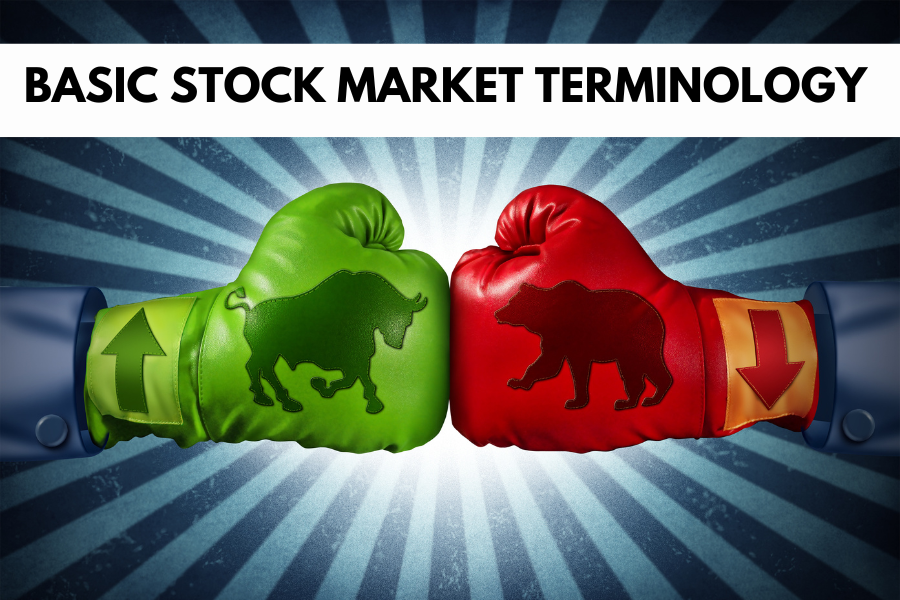
Bullish and bearish are related to the share prices. If you believe the share prices will increase, you are bullish about the stock prices or market. On the contrary, if you think that the prices will go down, you own a bearish opinion on the stock prices at the time. A bullish approach to the market suggests that the person is optimistic about it. While a bearish system means that the person thinks the prices will go down and the market is risky.
Start Investing Today!
Now that you have a general understanding of various aspects of the stock market, the next step is exploring good stock options. When purchasing stocks, remember to diversify your portfolio and invest in stocks of companies from different industries to ensure the minimum risk in adverse situations. Stockify is a good platform for trading shares and accessing share prices and important market indicators to make more profitable investments.