
Stockify Logo
About
Unlisted Share Price
Buy
Call
Live Prices:
Five-Star Business Finance Limited Unlisted Shares ₹474Bikaji Foods Unlisted Shares ₹321.15Adtech Systems Limited Unlisted Shares ₹78.75Dalmia Bharat Refractories Ltd Unlisted Shares ₹220.5Fincare Small Finance Bank Unlisted Shares ₹221Hexaware Technologies Ltd Unlisted Shares ₹800Cochin International Airport Limited Unlisted Shares ₹444.96Anglo-French Drugs & Industries Ltd Unlisted Shares ₹1,601.25Indofil Industries Limited Unlisted Shares ₹1,417.5Chennai Super Kings Unlisted Shares ₹260ESL Steel Limited Unlisted Shares ₹39.9Fino Paytech Limited Unlisted Shares ₹99.75Indian Potash Limited Unlisted Share ₹2,756.25Arohan Financial Services Unlisted Shares ₹246.75Hero Fincorp Limited Unlisted Shares ₹1,060.5ELCID Investments Limited Shares ₹2,36,250HDB Financial Services Limited Unlisted Shares ₹750HDFC Securities Limited Unlisted Shares ₹8,741.25Religare Health Insurance Unlisted Shares ₹117.6A V Thomas & Co. Limited Unlisted Shares ₹27,300Five-Star Business Finance Limited Unlisted Shares ₹474Bikaji Foods Unlisted Shares ₹321.15Adtech Systems Limited Unlisted Shares ₹78.75Dalmia Bharat Refractories Ltd Unlisted Shares ₹220.5Fincare Small Finance Bank Unlisted Shares ₹221Hexaware Technologies Ltd Unlisted Shares ₹800Cochin International Airport Limited Unlisted Shares ₹444.96Anglo-French Drugs & Industries Ltd Unlisted Shares ₹1,601.25Indofil Industries Limited Unlisted Shares ₹1,417.5Chennai Super Kings Unlisted Shares ₹260ESL Steel Limited Unlisted Shares ₹39.9Fino Paytech Limited Unlisted Shares ₹99.75Indian Potash Limited Unlisted Share ₹2,756.25Arohan Financial Services Unlisted Shares ₹246.75Hero Fincorp Limited Unlisted Shares ₹1,060.5ELCID Investments Limited Shares ₹2,36,250HDB Financial Services Limited Unlisted Shares ₹750HDFC Securities Limited Unlisted Shares ₹8,741.25Religare Health Insurance Unlisted Shares ₹117.6A V Thomas & Co. Limited Unlisted Shares ₹27,300
Add as a preferred source on Google
Stockify Logo

26, 1st Floor, 16th Cross Road, 18th Main Rd, J P Nagar Phase 5, J. P. Nagar, Bengaluru, Karnataka 560078

+91 80414 37692contact@stockifyfintech.com

QUICK LINKS

  • NSE
  • BSE
  • MSEI
  • NCDEX
  • NSDL Login
  • CDSL Login
  • MCX
  • Smart ODR

RESOURCES

  • About Us
  • All Unlisted Shares
  • Corporate Profile
  • News
  • Blog
  • Annual Reports
  • FAQ

RESOURCES

  • Connect
  • Become A Partner
  • Become A Contributor
  • DRHP Filed
  • Off-Market Annexures
  • Reviews
  • Investor Relations

UPCOMING IPO

  • Draft Offer Filed With SEBI
  • Red Herring Filed With ROC
  • Final Offer Filed With ROC
  • Other

Investment
Calculators

Powerful tools to plan your investments and financial future.

Investment Planning

  • SIP Calculator
  • Lumpsum Calculator
  • SWP Calculator
  • Goal SIP Calculator
  • Retirement Calculator

Loans & EMI

  • Home Loan EMI Calculator
  • Car Loan EMI Calculator
  • Personal Loan EMI Calculator
  • Education Loan EMI Calculator
  • Business Loan EMI Calculator

Financial Planning

  • PPF Calculator
  • EPF Calculator
  • NPS Calculator
  • Mutual Fund Calculator
  • FD Calculator

Tax & Savings

  • Income Tax Calculator
  • GST Calculator
  • TDS Calculator
  • XIRR Calculator
  • EPF Withdrawal Calculator

Other Calculators

  • Inflation Calculator
  • Step Up SIP Calculator
  • Compound Interest Calculator
  • CAGR Calculator
  • Stock Average Calculator

© 2026 Stockify · stockify.net.in · All rights reserved

PrivacyTermsDisclaimer

Disclaimer: Investment in unlisted shares carries a high level of risk. The logic for investment in unlisted shares is different from listed shares. Please consult your financial advisor before investing. Stockify is a platform to facilitate buying and selling of unlisted shares. Past performance does not guarantee future returns. Stockify is not a SEBI-registered stockbroker.

JOIN
What Are Corporate Bonds? -Meaning, Types,... | Stockify
What Is A Corporate Bond? Know The Types And Risks
blog

What Is A Corporate Bond? Know The Types And Risks

Corporate Bonds are often used by companies as an alternative to bank loans as it comes with several advantages. Read to learn more.

Rishabh Oberoi
Rishabh Oberoi
4 min read
Jul 9, 2025
Home›Blog›What Is A Corporate Bond? Know The Types And Risks

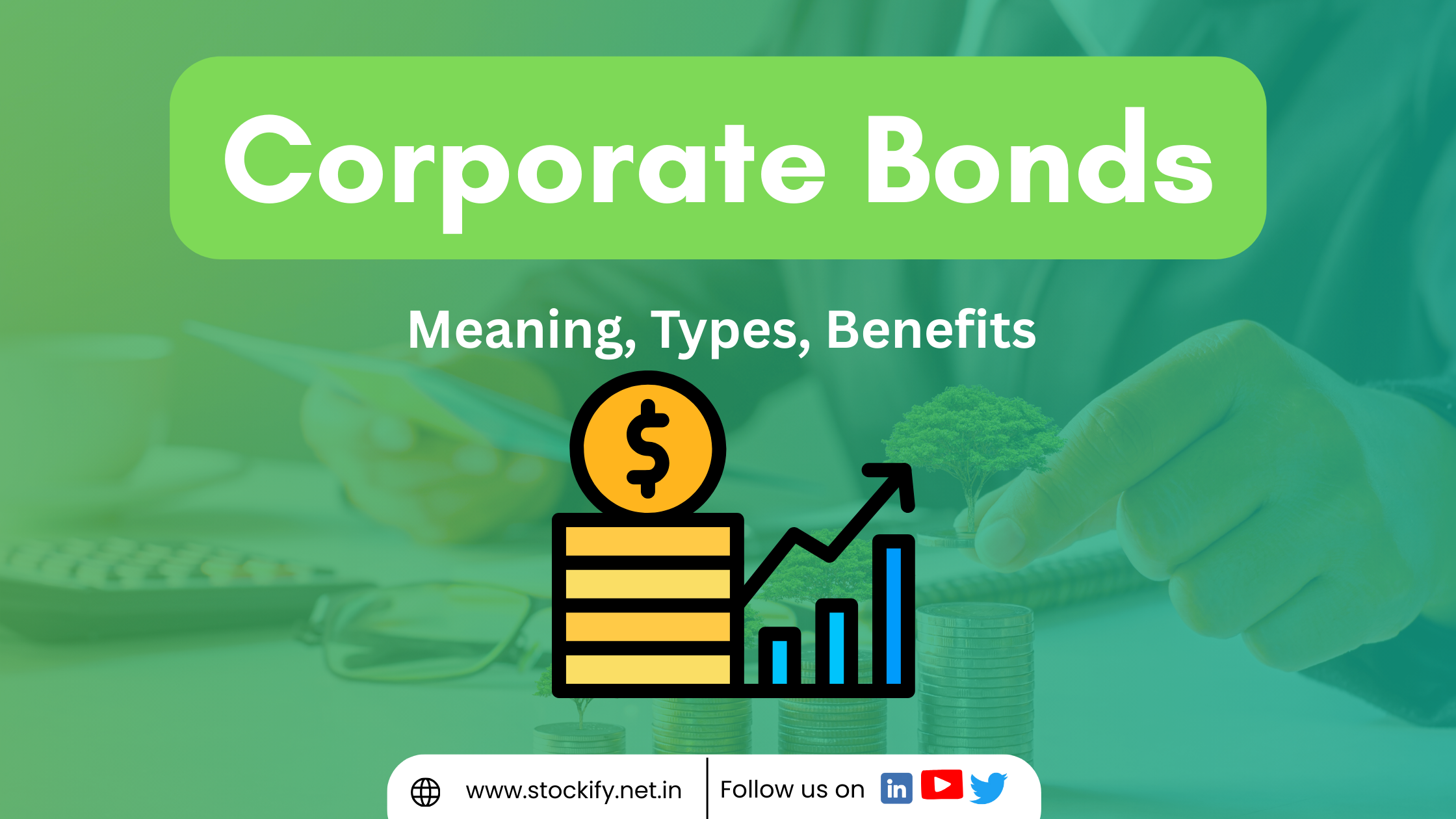
A corporate bond is a debt security that a company issues to raise money. Here, the company makes a legal commitment to pay interest on the principal and return the principal when the bond becomes due or matures. The company uses the money raised to grow its business, pay bills, build capital, make acquisitions or other business needs.

Corporate bonds in India gained much traction as an effective debt financing option compared to bank loans.

Corporate Bonds are considered a relatively safe investment compared to stocks as they are backed by a company's assets and cash flows. The creditworthiness of the issuing company is an essential factor for investing in bonds.

Understanding How Corporate Bonds Work

Before issuing bonds, they are reviewed and rated for their creditworthiness by one or more of the three major rating agencies in India, namely , ICRA and. Each one has its system of ranking, but the highest ranked is the 'AAA' Bonds. The lowest-rated bonds are called 'D', which means either the company is in default or has a high risk of default shortly.CRISILhttps://www.crisil.com/CAREhttps://www.careratings.com/

Features of a Corporate Bond

Bond ratings are essential to alert investors about the quality and stability of the company issuing bonds, directly affecting their interest rates and pricing.

1. Fixed Interest Payments

Corporate Bonds give fixed interest to investors at fixed intervals. Thus giving investors a stable stream of income, especially useful for investors looking for a predictable source of income.

2. Low Risk

Corporate bonds are low-risk options as they are backed by a company's creditworthiness.

3. Principal Investment Returned

Once the bond reaches its maturity period, investors get their principal amount back, thus minimising the risk of losing money.

4. Diversification

Investing in bonds helps investors in diversification of their funds, spreading their risks across different investments, leading to less overall portfolio risk.

5. Flexibility

Corporate Bonds can be sold in secondary markets, giving investors flexibility in holding their investments.

Types of Corporate Bonds

There are different options when it comes to investing in bonds. Some are short-term maturing in 3-5 years, while others can have a holding period up to 30 years. Here are some common types of bonds:

1. Credit Grade Bonds

These are bonds based on their creditworthiness. They range from top-tier AAA to BBB and D graded bonds. The credit rating affects the interest rate of bonds.

2. High-Yield Bonds(Junk)

These are debt securities issued by companies that have a major default risk compared to credit-grade bonds. Because of the high potential of default, there is uncertainty around the repayment of interest and principal. This makes them invest in bonds to compensate for the risk involved.

3. Convertible Bonds

These bonds give you an option to convert your bonds into a company's shares at a predetermined conversion ratio. This gives the potential for capital appreciation if the stock price rises.

4. Callable Bonds

Some corporate bonds are callable, i.e. the issuing company allows bondholders to redeem their shares before the date of maturity.

5. Zero-Coupon Bonds

Unlike traditional bonds with periodic interest payments, zero-coupon bonds do not make regular interest payments. Instead, they are issued at a discount of their fair value and grow to their face value at maturity, giving investors a lump sum payment.

How do Interest Rate and Liquidity Risk Affect Bond Prices?

Corporate bond interest rates have an inverse relationship with corporate bond prices. This means when the interest rate goes up, bond prices go down and vice versa. Let's understand with an example.

Let's say the face value of a bond is Rs 1,000.

This is the amount you get at maturity. Assuming the coupon rate (interest rate) to be 5% and the maturity time to be 1 year. The bond pays Rs 50 once, and you get back Rs 1,000.

A)Interest Rate Risk

Now let's say interest rate rises to 6%, i.e. the new bonds are paying Rs 60 for Rs 1000. But you pay only Rs 50 for Rs 1000. It's less attractive, so you sell it at a lower price. The new buyers will want to earn at least 6% from bonds.

So your new price will be {(50+1000)/ 1.06} = Rs 990.57.

Thus bond price dropped from Rs 1000 to 990.57 for 1% increase in interest.

B)Liquidity Risk

This is another type of risk where limited market demand can lead to a fall in bond price when a seller attempts to exit the position by discounting to find the existing buyer.

Why Companies Sell Bonds?

Corporate bonds are a form of debt financing. One of the major sources of financing for businesses, along with equity, bank loans and limits. They are often issued to provide companies with liquid cash for a particular project.

A company needs to have consistent earnings or earning potential to be able to offer debt securities to the public at a decent coupon rate. Also, companies with a healthy credit rating are able to issue more debt at lower interest rates.

Related Articles

OYO IPO -₹6,650 crore IPO (100% fresh issue)
Jun 3, 2026

OYO Parent Prism Gets SEBI Approval for Rs 6,650 Crore IPO

Shweta Sharma
Shweta Sharma
Read →
zepto unlisted share price
Jun 2, 2026

Zepto Shares Crash 30% in Unlisted Market Despite SEBI Nod for IPO. What's Cooking?

Shweta Sharma
Shweta Sharma
Read →
NSE Unlisted Share: Is the Pre-IPO Window Closing Soon?
Jun 1, 2026

NSE Unlisted Share: Is the Pre-IPO Window Closing Soon?

Rishabh Oberoi
Rishabh Oberoi
Read →
Rishabh Oberoi

Rishabh Oberoi

Financial Content Writer at Stockify

⚠️

Disclaimer: Investment in unlisted shares carries a high level of risk. The logic for investment in unlisted shares is different from listed shares. Please consult your financial advisor before investing. Stockify is a platform to facilitate buying and selling of unlisted shares.

Share:
Analyze with AI:
ChatGPT
Perplexity
Claude
Gemini
Grok

Table of Contents

01Understanding How Corporate Bonds Work02Features of a Corporate Bond03Types of Corporate Bonds04How do Interest Rate and Liquidity Risk Affect Bond Prices?05Why Companies Sell Bonds?

Invest in Unlisted Shares

Get exclusive access to pre-IPO stocks. Fill the form to get our latest price list.