

TL:DR
In the recent announcement, Suzlon Energy faced a severe brunt from the regulatory authority, SEBI. The governing body levied a fine of ₹29 crore on the Energy company for allegedly misrepresenting its financial statements. The fine affected the share price for Suzlon which dropped over 2%, giving panic to short-term investors. Here’s everything you need to know about what happened, why it matters, and what it means for your investment.
Suzlon Share Price Dropped: What Happened?
In the most closely watched regulatory action, SEBI has recently imposed a fine of ₹29 crore on Suzlon Energy. It is one of India's largest renewable energy companies but its recent misrepresentation of financials have left investors and the government in awe.
Suzlon Energy has found itself at the center of the major regulatory storm. The penalty amount is hefty and the decision has sent shock waves across Dalal Street and shaken the investor’s sentiments.
The market reacted swiftly after the news leading to slipping of Suzlon share price
over 2% on heavy selling pressure following the announcement.
SEBI’s order alleged that Suzlon had misrepresented the financial statements. It further misled investors and violated disclosure norms under SEBI’s LODR (Listing Obligations and Disclosure Requirements) regulations. Such penalties create a panic in the market especially when it comes from the regulator. It alters the investment decisions from institutional and retail investors alike.
Suzlon Share Price
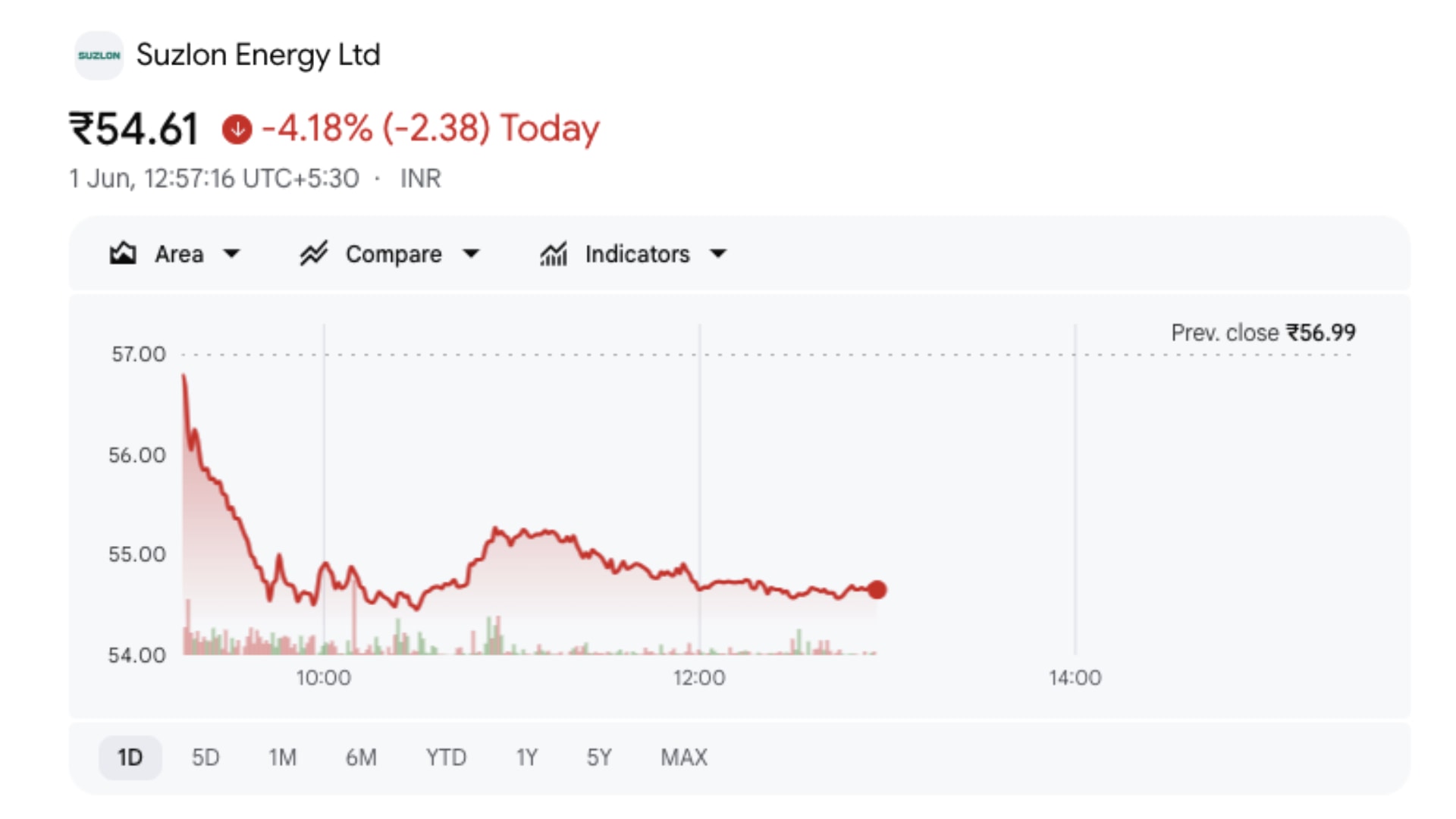
Source: Google Finance
Why Did Suzlon Share Price Fall?
Immediate regulatory actions from SEBI triggered the sharp sell-offs because they raise concerns about corporate governance and transparency. Here’s why the Suzlon Share Price reacted negatively:
Investor’s confidence is shaken due to allegations of misleading financial reporting. When a company is accused of misrepresenting its financials, it raises serious doubts about the reliability of past earnings data.
Institutional selling typically follows any SEBI penalty announcement. Large funds and foreign portfolio investors alter their investment decisions especially after such strict compliance mandates. It often triggers automatic exits for them, when a stock faces regulatory action.
Uncertainty about further action, including possible appeals or additional scrutiny. SEBI penalty can sometimes be the beginning of a longer investigation, leaving investors unsure about the company’s legal and financial exposure going forward.
Sentiment driven retail sell off adding to downside pressure. It is the retail investors that form the large chunk of Suzlon’s shareholder base. And panic selling by small investors compounds the fall triggered by institutional exits.
About Suzlon Energy
Suzlon Energy is a Pune-based wind energy solutions provider and one of Asia’s largest renewable energy companies. The stock has been a favourite among green energy investors in recent years, riding India’s renewable energy boom. However, this isn’t the company’s first brush with the financial controversy-Suzlon went through a massive debt restructuring phase in the early 2010s before staging a remarkable comeback.
What Does SEBI’s ₹29 crore Fine Mean for Investors?
The heavy fine imposed by SEBI is unavoidably significant because the amount is not small. It may not materially impact Suzlon’s overall financials given its scale, but here are a few things important for the key investors:
Short-Term: For such investors, must be prepared for continued volatility in Suzlon share price. It takes time for the market to digest such news.
Medium Term: The medium investors must regularly watch for the company’s official response. They must wait or observe whether Suzlon plans to appeal SEBI’s order.
Long-Term: The fundamentals of the renewable energy sector remain strong, hence the long term investors must not be wary of it. But at the broader level, such governance concerns could weigh on valuations.
Governance Red Flag: Those who focus too much on ESG (Environmental, Social, Governance) metrics may reassess their position.
Should You Buy, Hold, or Sell Suzlon Shares?
This is a question every investor is asking right now. Here is a balanced perspective:
If you are a long term investor, bullish on India’s Wind Energy story a 2% dip may not be a deal-breaker, but monitor the SEBI case closely.
If you’re a short term trader, the regulatory overhang could create further downside risk in the near term.
Always consult a SEBI registered financial advisor before making investment decisions.
Conclusion
The SEBI fine has clearly spooked the market, sending Suzlon share price down over 2% in a single session. While the penalty may not derail Suzlon’s long-term business, the allegations around misleading financial statements are a serious governance concern that investors cannot ignore.
Keep a close eye on Suzlon’s official response and any further SEBI developments before making any portfolio decisions.
FAQs
Why did Suzlon share price fall today?
The Suzlon share price dropped after SEBI imposed ₹29 crore penalty after allegedly misleading the financial statements.
What did SEBI fine Suzlon Energy for?
SEBI penalised Suzlon for misrepresenting its financial disclosure which misled investors.
Is Suzlon Energy a good stock to buy after all this?
It is an individual’s choice to make investments. Before making any decision, it is best to consider any SEBI registered financial advisor.
Has Suzlon faced SEBI action before?
Suzlon has had a turbulent financial history, including a major debt restructuring in the past.