

TL;DR
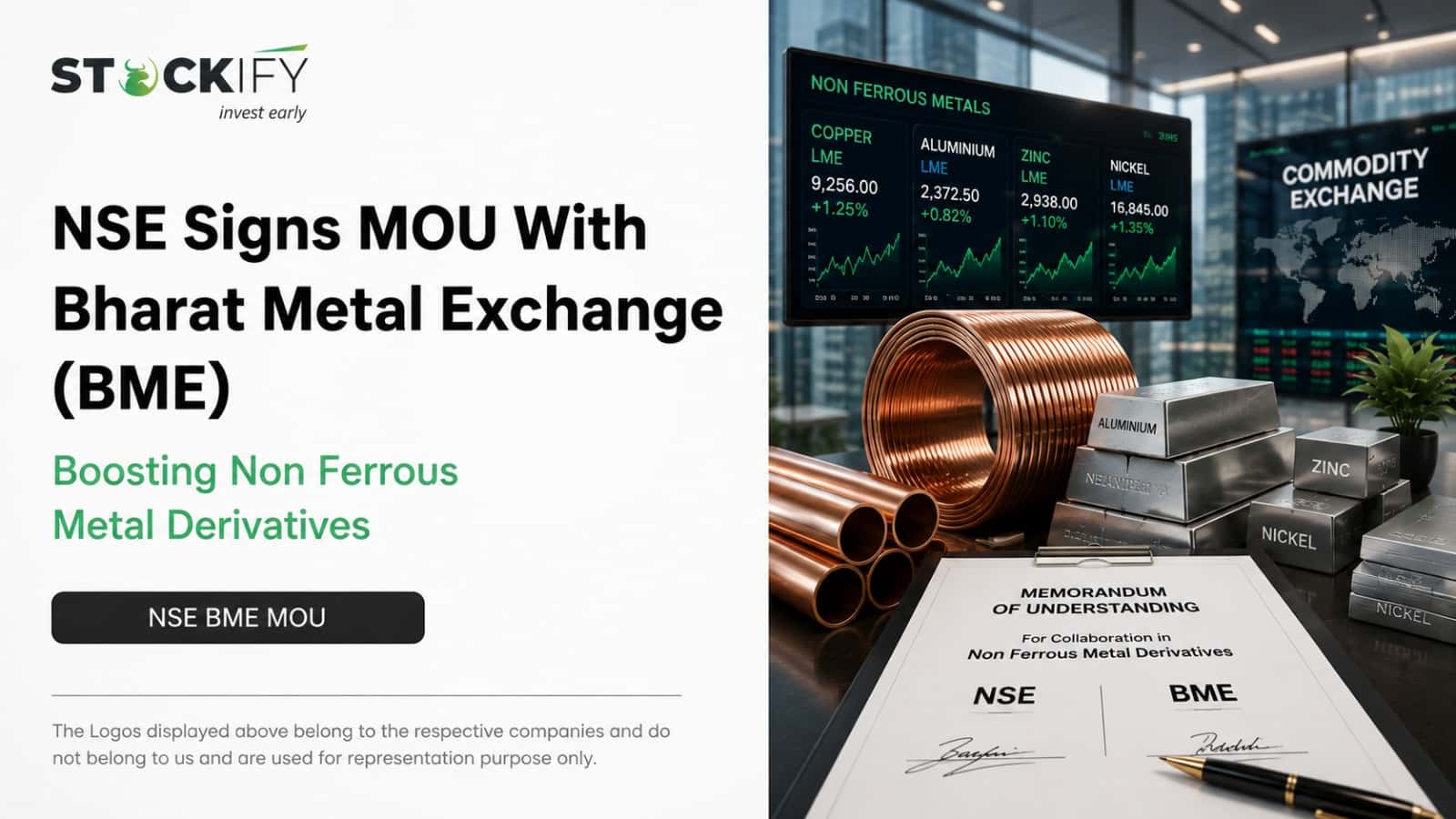
The NSE BME MoU was signed on June 22, 2026.
Aim is to develop India's non-ferrous metal derivatives ecosystem.
Bharat Metal Exchange (BME) brings over 90 years of industry experience and a network of 800+ members.
The partnership aims to develop metal-derivative products.
The NSE BME MoU follows NSE's recent commodity initiatives, including Electronic Gold Receipts (EGRs) and its partnership with SUFI
Introduction
On June 22, 2026, NSE signed an MoU with Bharat Metal Exchange (BME) to jointly develop India's non-ferrous metal derivatives ecosystem. BME is one of India's oldest metal trade associations with more than 90 years of experience and deep connections across the physical metals industry. Let’s understand what their Partnership Covers in detail.
The Statements Of NSE
According to the business today, NSE stated that “India is one of the world's largest consumers of industrial metals such as copper, aluminium, zinc, lead, and nickel. As domestic manufacturing, infrastructure development, renewable energy, and electric mobility continue to expand, market participants increasingly require transparent and efficient mechanisms to manage price volatility."
Who is BME?
BME stands for Bharat Metal Exchange Ltd., formerly known as Bombay Metal Exchange Ltd.
It was established in 1933, making it one of India's oldest institutions in the non-ferrous metals trade.
BME has more than 800 active members across India and deep relationships across the physical metals ecosystem.
Why Did NSE Partner With BME?
NSE signed an MoU with BME on 22 June 2026 to develop India's non-ferrous metal derivatives ecosystem. The partnership could aim to:
1. Develop New Metal Derivative Products
NSE plans to introduce and improve derivative contracts linked to non-ferrous metals. These contracts can help market participants hedge against fluctuations in metal prices.
What Are Non-Ferrous Metals?
These are metals that do not contain iron, including Copper, Aluminium, Zinc, Lead and Nickel. These metals are critical for sectors such as Electric Vehicles (EVs), renewable energy, power transmission, infrastructure, manufacturing and electronics.
As India expands its manufacturing base, demand for these metals could be expected to grow significantly.
Industries Are Being Targeted
Metal | Industries |
Copper | EVs, Power Transmission |
Aluminium | Infrastructure, Transport |
Zinc | Steel Galvanization |
Lead | Batteries |
Nickel | EV Batteries, Stainless Steel |
2. Increase Industry Participation
The collaboration could seek to attract the metal producers, importers, exporters, traders, processors and manufacturers into the derivatives market.
3. Build Awareness Around Hedging
Many businesses still face losses due to volatile metal prices. NSE and BME will work to educate industry participants on how derivatives can be used for price-risk management.
4. Strengthen Market Infrastructure
The objective is to create a more structured ecosystem where the physical metal market and derivatives market work together efficiently.
Commodity Strategy Is Becoming Visible
Initiative | Timeline |
Electronic Gold Receipts (EGRs) Launch | May 2026 |
MoU with Steel Users Federation (SUFI) | May 2026 |
MoU with Bharat Metal Exchange (BME) | June 2026 |
NSE's recent initiatives indicate a deliberate strategy to deepen its presence in commodity markets. Following the launch of Electronic Gold Receipts (EGRs) and its partnership with the Steel Users Federation of India, the exchange has now collaborated with Bharat Metal Exchange, which could strengthen the non-ferrous metals derivatives ecosystem.
NSE Could Be Building Industry-Focused Liquidity
A major challenge for commodity derivatives is liquidity. Business Today's coverage reinforces that NSE is not launching products first and hoping users arrive later.
Instead, NSE is partnering directly with industry bodies such as:
Partner | Segment |
SUFI | Steel |
BME | Non-ferrous metals |
This approach could allows NSE to engage actual producers, processors, manufacturers, traders, importers, and exporters before expanding product offerings
Why Is This Important for NSE?
It is important for NSE to partner with an organisation that already has deep industry penetration, which could likely make adoption of metal derivatives potentially easier.
What Each Partner Brings
NSE | BME |
Exchange infrastructure | Industry network |
Derivatives expertise | More than 800 industry members |
Trading technology | Physical market knowledge |
Market reach | Metals' ecosystem relationships |
Together, these steps could reflect NSE's efforts to diversify its product portfolio, expand participation in commodity markets, and create new long-term growth avenues beyond its dominant equity derivatives business.