

A company founded just five years ago is now processing nearly Rs 8,500 crore worth of orders every quarter. But is this simply a growth milestone, or does it signal that Zepto is finally evolving from a fast-growing startup into a mature, IPO-ready platform? Let's take a closer look.
What does "$1 Billion NOV" mean?
NOV stands for Net Order Value. It represents the value of orders after discounts, returns, and cancellations. It is one of the most important operating metrics for quick-commerce companies because it reflects the actual scale of customer transactions.
According to moneycontrol, Zepto is on track to cross $1 billion in quarterly NOV, up from about $500 million in late 2025. This means Zepto's order value has doubled within a few quarters. The annualized NOV is around Rs 34,000 cr.
Therefore, Zepto has built a massive business scale within just 5-6 years, reducing the perception that it is merely a startup and positioning it as a major consumer platform.
How Is Zepto Reducing Losses?
Metric (in Rs Cr) | Earlier | Current |
Quarterly Cash Burn | 1,200-1,300 | 850-900 |
EBITDA Loss | 100-110 | 55-60 |
Quarterly NOV | $500 million (Rs. 4250 cr) | $1 billion (Rs.8500 cr) |
Cutting cash burn
According to ET Brand equity, Zepto has significantly reduced its quarterly cash burn from Rs.1,200-1,300 cr to around Rs.850-900 cr a few quarters ago. The reduction of nearly 30% reflects stronger cost discipline ahead of its IPO. Additionally, management has guided for EBITDA breakeven by FY28 and net profitability by FY29, signalling a focus on sustainable growth.
Growing NOV at scale
In just a few quarters, Zepto's quarterly NOV has jumped from $500 million (Rs 4,250 cr) to nearly $1 billion (Rs 8,500 cr). For the company, this isn't just about huge numbers. Instead, it means its technology, warehouses, and delivery network might be being used more efficiently, which can help reduce losses over time.
Increasing dark-store productivity
With nearly 1,100 dark stores already in operation, Zepto is prioritising higher order volumes from existing locations rather than rapid expansion. This strategy could improve efficiency and help control operating costs.
Focusing on grocery categories
By prioritising groceries and everyday essentials, Zepto is encouraging repeat purchases from existing customers. This could strengthen retention and improve marketing efficiency over time.
Improving unit economics
More people are ordering from Zepto than ever before, with daily orders reaching nearly 2.5 million. At the same time, losses have almost to 50%. This indicates that the company is not just growing faster, it is also becoming more efficient with every additional order.
How Does Zepto Compare to Competitors?
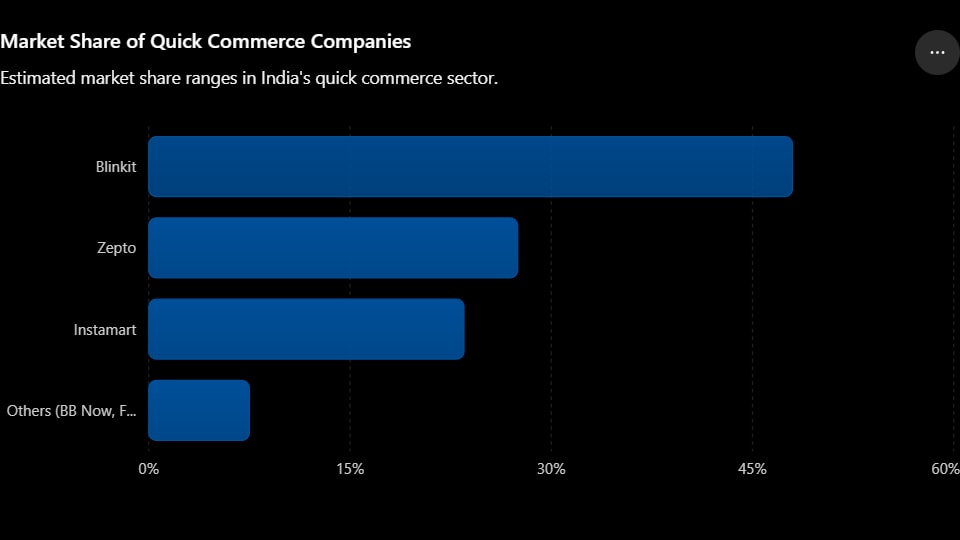
India's quick-commerce market is currently dominated by three major players. Blinkit remains the market leader with a quarterly NOV of Rs 14,386 cr (around $1.5 billion) in Q4 FY26, controlling nearly half of the market. However, Zepto's quarterly NOV of nearly Rs 8,500 cr means it has already reached about 59% of Blinkit's scale. This is a significant achievement for a company founded only in 2021.
Meanwhile, Zepto has matched or surpassed Swiggy Instamart, which reported a GOV of Rs 7,881 cr in Q4 FY '26.
Zepto IPO Timeline
Stage | Status |
December 25: Filed DRHP with SEBI | Completed |
8 May 2026: Received SEBI approval | Completed |
Updated DRHP Filing | Expected Soon (likely in June, '26) |
Roadshows | Expected After UDRHP (June-July) |
IPO launch window | Likely July 2026 |
Target listing on NSE/BSE | Likely Before 31st July 2026 |
In May 2026, Zepto received SEBI approval. The expected Zepto IPO issue size could be between Rs 7,500 cr and Rs 9,300 cr. The IPO structure will be a mix of OFS and fresh issues. Zepto is now expected to submit an Updated DRHP (UDRHP), likely in June 2026, reflecting the latest financials, growth metrics, and business developments. This has also led to investors considering the potential investment opportunity in Zepto Unlisted Shares before the IPO.

.jpg.jpeg)